
Published date:
Last updated:
Android screen mirroring
This page contains the user manual for alfacast application. This complete instruction is useful for people who want to learn how to use alfacast screen mirror app on Android OS. To use Android screen mirroring feature with alfacast app, you need one or more of the following devices: smart phone, tablet, laptop, PC (Personal Computer), SBC (Single-Board Computer) like Raspberry Pi, Orange Pi, Banana Pi, or other Android compatible device. Your device must have Google Android operating system installed.
Alfacast is a screen mirroring app with streaming and viewing features. For the best understanding of this user manual, whenever the Android screen mirroring feature is mentioned, it means alfacast app is used to mirror the screen on your Android device. You can find more detailed info about alfacast app on Home page. In this user manual we will show you how to use the application and tell you about its main functions.
Main app features
Our Android screen mirroring solution is available in two versions. There are two separate versions of alfacast application: regular (alfacast) and extended (alfacast x). Below is a list of the app’s main features:
• Audio and video stream splitter for simultaneous real time streaming of content to multiple devices (up to 8 channels).
• Streaming through all network interface types: Wi-Fi, Ethernet, Bluetooth.
• Screen streamer and viewer within local area network.
• Serverless single channel peer-to-peer streaming technology.
• Serverless multichannel peer-to-many streaming technology.
• Low latency playback. This feature is only available in the extended version of the app.
• Video streamer & viewer up to SD quality and 30 FPS in the regular app version.
• Video streamer & viewer up to 4K Ultra HD quality and 60 FPS in the extended app version.
• Automatic discovery of users on the local network.
• Secure connection with end-to-end AES-128 encryption technology in the regular app version.
• More secure connection with end-to-end AES-256 encryption technology in the extended app version.
The extended version of the application differs from the regular version by its more advanced functionality and capabilities. Everything described here applies to both versions of the application (regular and extended), unless the different behavior of the two versions is explicitly described. More detailed information about the differences between the two versions of the app will be provided later in this user guide.
System requirements
Please note, alfacast app has some requirements to use the Android screen mirroring feature:
• Google Android operating system with minimum version 6.0.
• Minimum RAM size: 1 GB. Recommended RAM size: 6 GB.
• Minimum CPU: 1.5 GHz quad-core. Recommended CPU: 2.5 GHz octa-core.
• Minimum display resolution 800×480 pixels.
• Maximum streaming resolution up to 4K Ultra HD – 3840×2160@60 Hz.
• Minimum 100 Mbps router. Recommended 1 Gbps 5 GHz Wi-Fi router.
• Supported CPU architectures: AMD64, I386, ARM64, ARMHF.
• Minimum 100 MB disk space.
• Support IPv4 networks only.
• The devices should be connected to the same network.
• The operating system must support the following video codecs: H.264, H.265, VP8, VP9 (hardware accelerated or software).
4K Ultra HD resolution and 60 FPS requirements
Please check the following points to ensure proper support for 4K Ultra HD Android screen mirroring on your devices:
• Extended version of application on streamer and viewer side.
• Display with 4K Ultra HD resolution and 60 Hz on streamer side.
• Hardware accelerated H.264, H.265, VP8, VP9 video codec with 4K Ultra HD support.
• The final video stream resolution and refresh rate depends from the maximum resolution and refresh rate of streamer’s display, current video codec configuration and network bandwidth.
The application supports
For a better understanding, we provide the following list of features that our application supports:
• Streaming audio and video from your screen.
• Playback audio and video on the side of the viewer.
• Screen streamer and viewer in one application.
• Audio and video splitter for simultaneously streaming screen content to multiple devices in real time.
• Secure connection with end-to-end encryption.
• Display current streaming information.
• Automatic users discovery in the local area network.
• Android screen mirroring with a local network connection only.
The application does not support
To avoid any misunderstandings, we provide the following list of what our application does not support:
• Alfacast is not DLNA™, UPnP™ media render or media server.
• Alfacast is not Apple AirPlay™ receiver or transmitter.
• Alfacast is not Google Chromecast™ receiver or transmitter.
• Alfacast is not Miracast™ receiver or transmitter.
Alfacast is an independent Android screen mirroring application based on proprietary streaming technology. As a result, the user has to install alfacast app on both sides: on the streamer and on the viewer devices.
Installing and uninstalling the app
As we mentioned earlier, our Android screen mirroring solution is available in two separate app versions. You can find current links to the application on our Downloads page.

Figure 1. Alfacast application icons for Android.
The regular (left) and extended (right) versions
Figure 1 shows two app icons. On the left is the icon for the regular version of the “alfacast” app. On the right is the icon for the extended version of the “alfacast x” app. We use our website to distribute app for Android OS. Please download the app package directly to your device or use a USB drive to install. After a successful download, you need to install the APK file on your device using any method: through a browser, a file manager, or using the adb command. If the setup app (browser, file manager or adb command) asks for permission to install the APK package, please grant this permission. The application is available in the standard Applications Menu on your Android device immediately after successful installation.
The application is removed in the usual manner for an Android device. Drag the app icon to the trash bin icon and delete it, or use the adb command.
As we can see, the installation and removal of the application is carried out in the standard way using APK files for a device based on the Android OS.
App permissions
The screen mirroring function combines two main features: screen capture and audio capture. Android OS requests permission to capture screen and record sound. Please provide all necessary permissions for the application to function properly.
The application also requests permissions in the following cases:
• At the start of the application. Permissions to send notifications (Android 13 and above).
• On selecting a user avatar image from files or a photo library. Permissions to read data from your device’s disk.
• On installing a new version of the app. Permission to install applications.
Later in this user manual, we will examine in more detail all requests for access to the required permissions.
Launching the application
Please tap on the application icon from the Applications Menu and launch it. On launch the application, it will initialize and you will see the window shown in the following figure.
Figure 2. Application splash screen window
After some time, but no more than 90 seconds, the window will show the main controls. Main application window displays the streaming devices found on the local network in a special area, see the following figure.
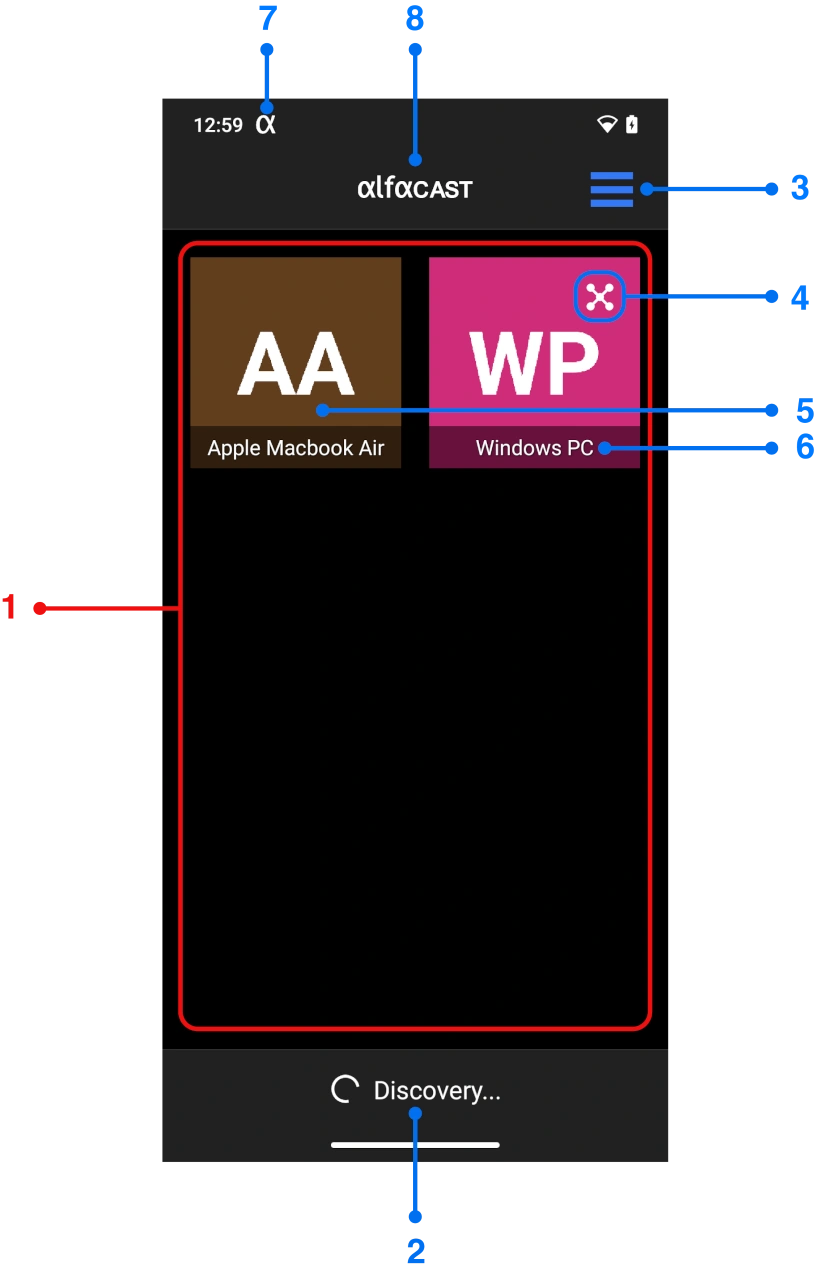
Figure 3. Main application window
The Main application window contains the following controls:
1 – Display area of discovered network nodes. List of network nodes with streamer functionality.
2 – Current status of the application with activity indicator. The values for this field can be:
• “Initializing…” – the application is in the initialization state.
• “Please wait…” – need to wait for some time.
• “No connection” – there is no network connection on your Android device.
• “Discovery…” – the application is ready to work and is discovering all network nodes within the local network.
3 – Menu button. Show and hide menu.
4 – Multichannel streamer mode indicator. This indicator always appears on network nodes with enabled multichannel streaming mode.
5 – Network node icon with name – “Apple Macbook Air“.
6 – Network node icon with name – “Windows PC“.
7 – Application icon in the notification area. The icon serves as an indicator that the application is currently running.
8 – Letter logo for the application.
In this manual we will use the concept of a network node – this is a network host on which alfacast application is running. Alfacast is both a streaming and a viewing app. Accordingly, each network node may have either the streaming function, the viewing function, or both functions available. Android based network nodes support both streaming and viewing functions to provide Android screen mirroring functionality.
Navigation in the application is carried out in the standard way, as on any device based on the Android OS. The back navigation button on your Android device is used to exit the current window.
After starting, the application immediately tries to detect all network interfaces and start the network node discovery process on each network interface. If no network interfaces are detected, you will see the corresponding application status – “No connection“. In this case, you should provide at least one network interface to start the network node discovery process. Please connect to the Wi-Fi router or use wired connection between router and your Android device. If the network interface is present, the application will change its status to – “Discovery…“. The “Discovery…” status means that network discovery is currently in progress. The discovery process is typically quick and takes no more than 30 seconds.
The Application icon always appears in the notification area when the app is running or in the background. In the background, the app detects network nodes and waits for incoming connections until you explicitly close the app. We will describe how to completely close the app below.
To display the application’s Main menu, click the Menu button. After clicking the Menu button, a list of menu items will appear on top of the Main application window, see the following image.
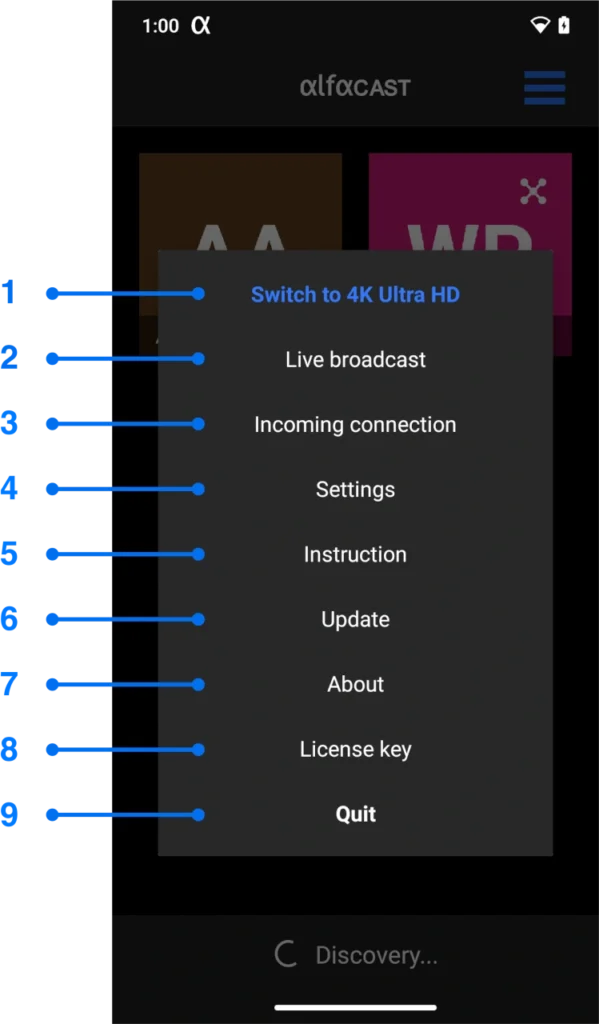
Figure 4. Main menu
The Main menu contains the following controls:
1 – 4K Ultra HD switch button. This button is used to review with the extended version of the application.
2 – Live broadcast button. The button switches the streamer to multichannel streaming mode.
3 – Incoming connection button. The button opens a window with information about the incoming connection.
4 – Settings button. The button opens a window with the application settings.
5 – Instruction button. The button opens a window with instructions for the application.
6 – Update button. The button opens the application update window.
7 – About button. The button opens a window with information about the application.
8 – License key button. The button opens a window with license key information.
9 – Quit button. This button completely terminates the application.
The 4K Ultra HD switch button is a reminder that there is a more advanced, extended version of the app. This button is only available in the regular version of the app and is hidden in the extended version. Click this button to see options for switching to the extended version of the application.
The functionality of all buttons is discussed further, please see the following sections of this user manual. A description of how the Live broadcast button works can be found in the Multichannel streamer section of this manual.
Interacting with the Incoming connection button is described in the Incoming connection section. For more information on how the Instruction button and About button works, please refer to the App instruction and About sections. The Settings button is described in the App settings section.
For information on how to update the app and how the Update button works, see the App update section.
Click the License key button if you have one and want to activate it. All necessary steps for activating the license key are described in the App license key activation section.
The display area of discovered network nodes will reflect all detected network nodes with steaming function. In simple terms, these are streamers on your local network. To start the Android screen mirroring process, you need to select a network node from this area. Click on any network node to start the playback process.
The Multichannel streamer mode indicator is displayed if the network node has enabled multichannel streaming mode. The multichannel streaming mode is described further in this user manual.
In addition to the current application status, there is a mini application status. This mini status is displayed at the bottom right corner of the Main application window, see the picture below.
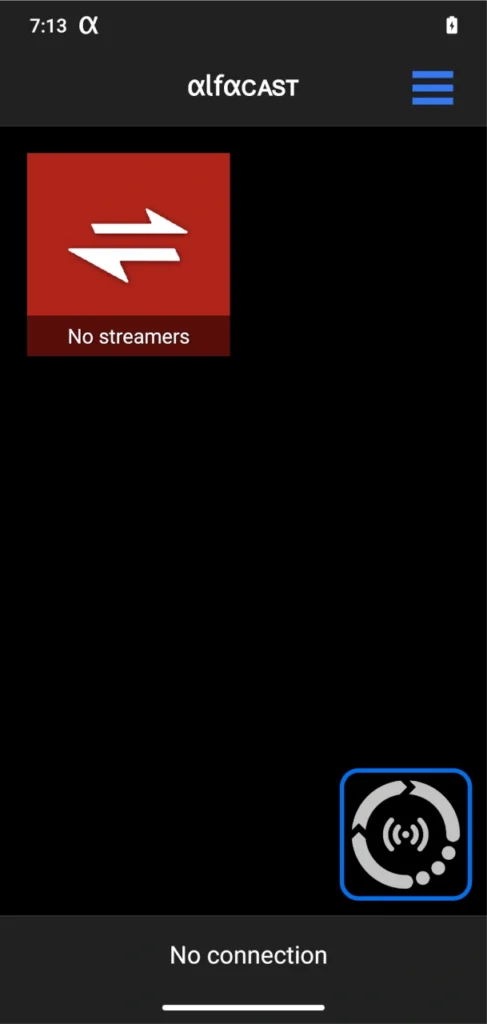
Figure 5. Mini status
The application’s mini status graphically explains what is currently happening, making it easier to understand the current status. Mini status is displayed in the following cases:
• The application is initializing.
• An operation is taking place that requires some time to wait.
• There is no network connection.
If you switch to another application or send the application to the background by pressing the back button, the application will continue to work in the background: detecting network nodes and waiting for incoming connections. To fully terminate the app, tap the Quit button. This action will shut down all background services and close the app. Only the unused and uninitialized Main application window will remain in the list of recent apps.
Below we provide a description with the minimum set of steps to start streaming or viewing on your Android device.
Steps for screen streaming
To start streaming your display with Android screen mirroring feature, please follow the steps below on your streaming device:
• Download alfacast application on your devices.
• Connect your devices to the same network.
• Run alfacast application on your devices.
• Now you are ready to accept incoming connection.
Steps for screen viewing
To start viewing remote display with Android screen mirroring feature, please follow the steps below on your viewing device:
• Download alfacast application on your devices.
• Connect your devices to the same network.
• Run alfacast application on your devices.
• Wait end of the discovery process (approximately 15-30 seconds).
• Select the required streamer from the list and wait end of the connection process.
• Now you will view remote screen.
App notifications
The application will generate notifications while it is running. App notifications are important, and we recommend leaving them enabled. In the following figure you can see an example of a notification from alfacast application on Android OS.

Figure 6. App notifications
The app will send notifications every time the user connects or disconnects, as well as informational, warning, error, and other messages. At launch, the app will ask you for permission to send notifications (Android 13 and above).
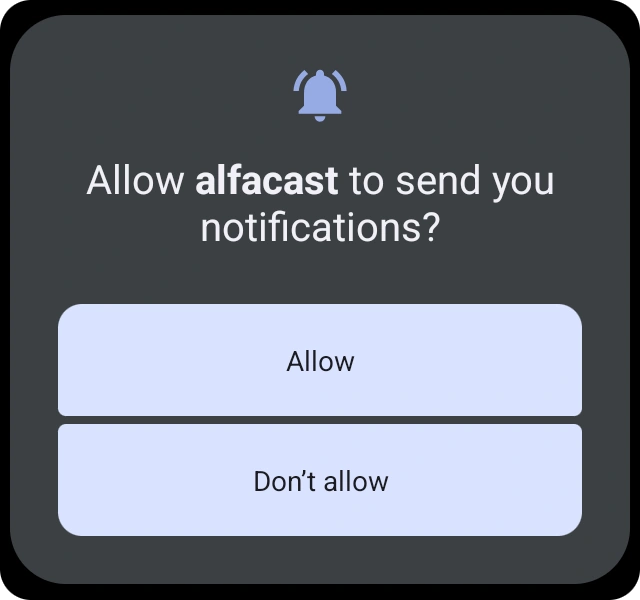
Figure 7. App requests notification permissions
Please click the Allow button to receive notifications from the application. If you do not want to receive notifications related to Android screen mirroring, click the Don’t allow button.
Screen streaming
All Android based network nodes already have the streamer option enabled. There is no need to enable streaming in the app separately – this option does not exist. The Android screen mirroring streamer feature is always enabled after launching the app.
To establish an incoming connection on the broadcasting device, follow the steps to start streaming and make it active (on top of other application windows). On the viewing device, follow the steps to start viewing.
Screen capture permission must be granted each time a new incoming connection is established. If you do not grant screen capture permission, the connection between the streaming device and the viewing device will be terminated. When establishing an incoming connection, the app will also request permission to record audio. You can deny permission to record audio if you do not want to grant the app access to the Android audio subsystem or simply do not want to transmit audio during the broadcast.
On initiating an incoming connection, the app will request permission to access your audio device firstly. You will see the following dialog box.
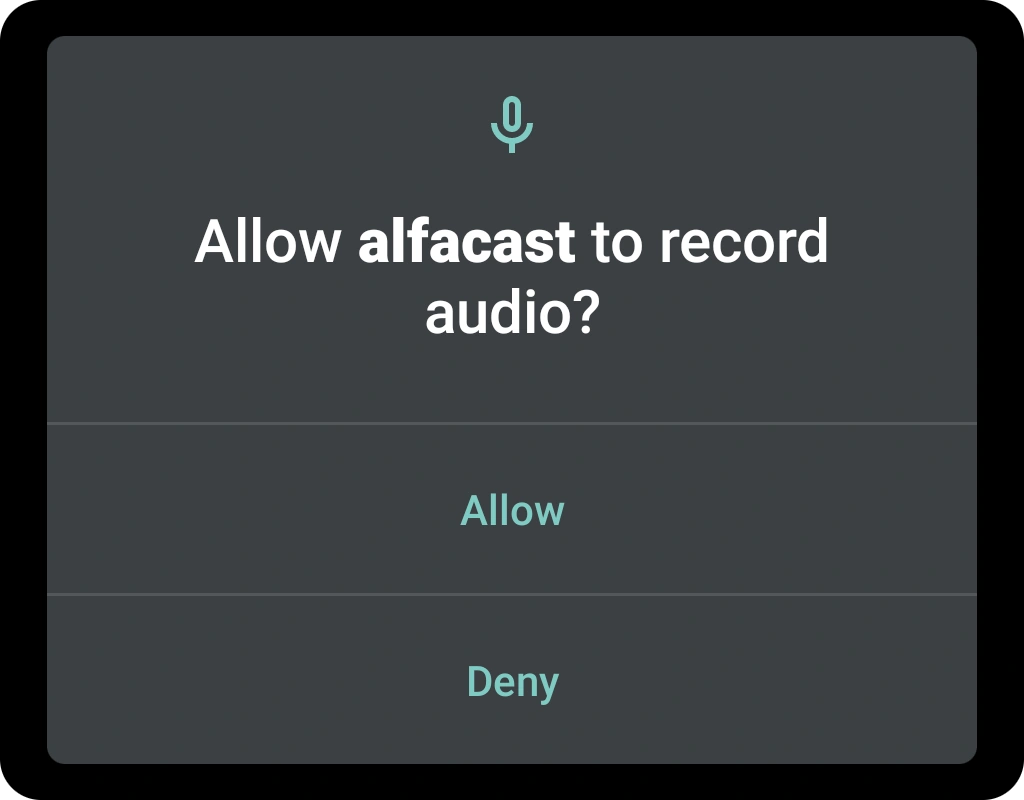
Figure 8. Start audio streaming dialog box
If you click the Deny button, the audio capture will not be performed and the incoming connection initiation will still continue. Please click the Allow button if you want the application to capture audio. The request for permission to access audio recording only occurs if you have enabled the Audio capture option in the app settings (see the App settings section below) and your Android device has audio input sources: microphone, line-in audio port, etc.
Once you have chosen the audio capture option, the application will ask for permission to capture screen from your device.
If you are using Android 13 or earlier, when you establish an incoming connection, you will see the following dialog box.
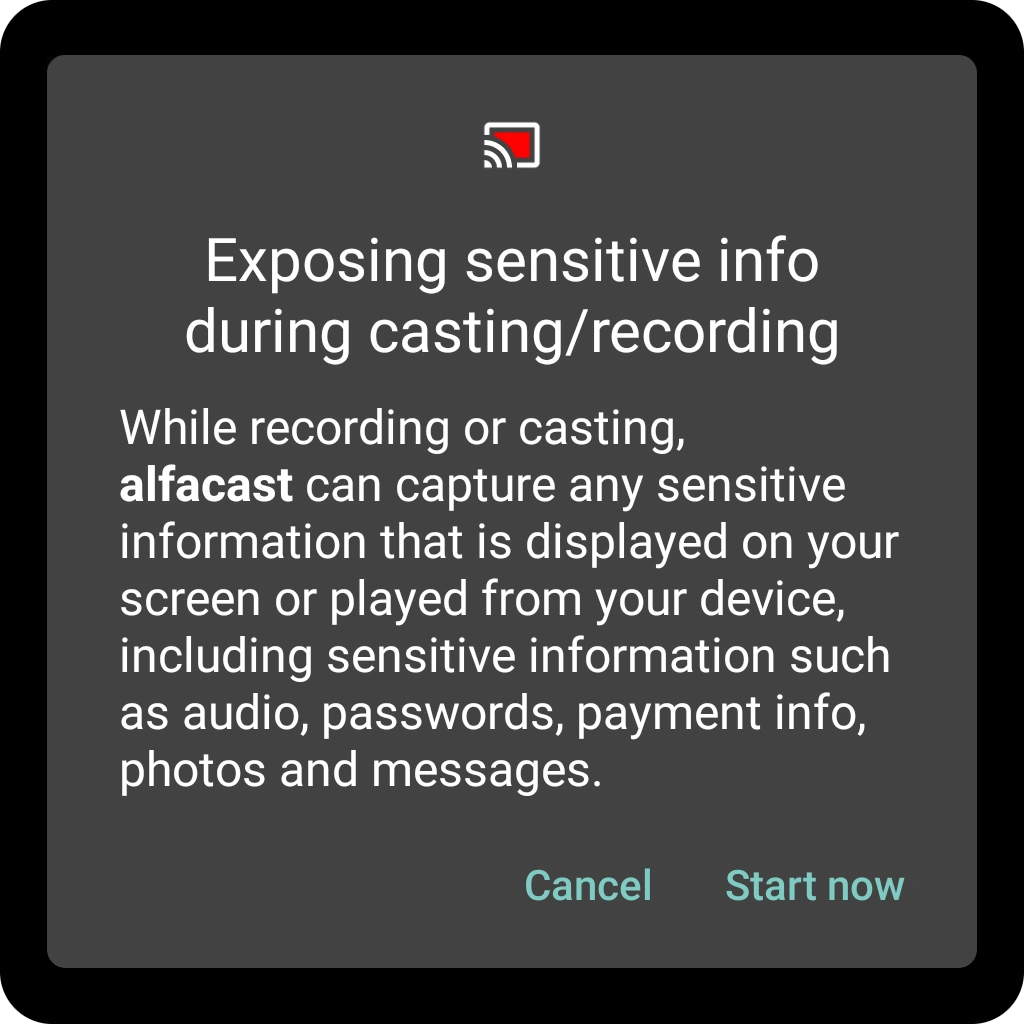
Figure 9. Start video streaming dialog box on Android 13 and earlier
This dialog box presents two buttons to choose from. Click the Start now button when you are ready to begin broadcasting. If you change your mind or want to cancel the broadcast, click the Cancel button. Please remember that once the broadcast starts, the video image will be captured entirely from the screen of your device.
If you are using Android 14 or higher, when you establish an incoming connection, you will see the following dialog box with a list of available sources.
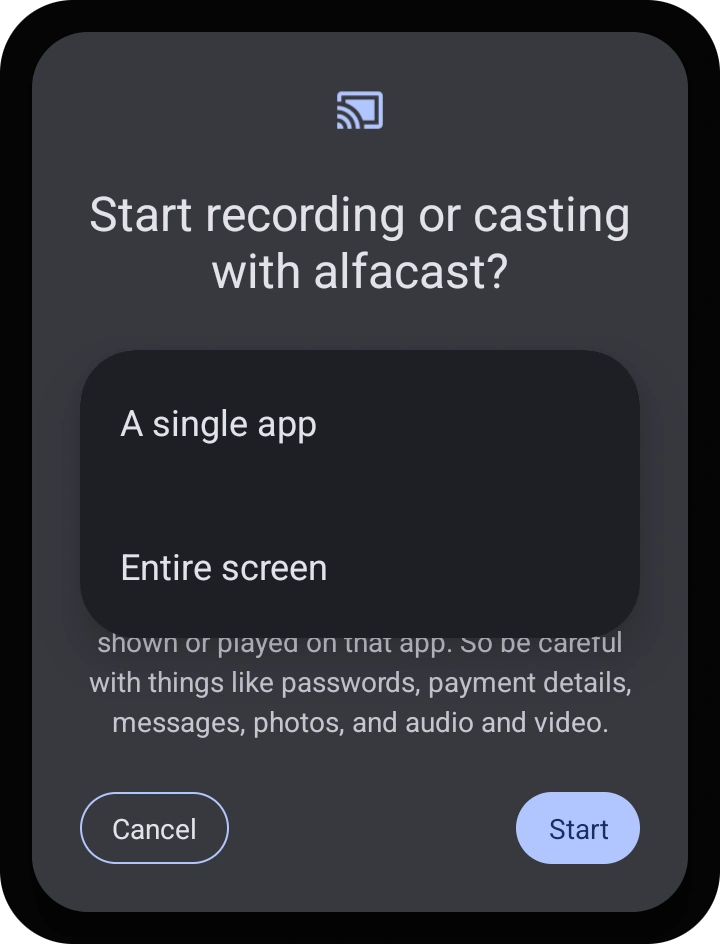
Figure 10. Source selection dialog box on Android 14 and higher
In this dialog box, you need to select the screen or app window that will be used by the application as a video capture source. A single app option from the list means that video image capture will be performed only from one application. Entire screen option means that the video image will be captured completely from the entire display of your device. Click the Start button when you are ready to begin broadcasting. If you change your mind or want to cancel the broadcast, click the Cancel button.
All incoming connections and disconnections are notified. There are two streaming modes: single channel (enabled by default) and multichannel mode (see below).
Screen viewing
To start viewing content from a remote screen, you have to select a network node in the Main application window. After selecting a network node please tap on it, a Playback window will open, see below.

Figure 11. Playback window
At the connection stage, the Playback window contains the following elements:
1 – Network node name. Remote host alfaname or user name.
2 – Activity indicator.
3 – Current connection status. The values for this field can be:
• “Connecting…” – the process of connecting to a network node is in progress.
• “Buffering…” – the data buffering process is in progress.
• “Disconnecting…” – the process of disconnecting is in progress.
• “Reconnecting…” – the process of reconnecting is in progress.
4 – Letter logo for the application.
5 – Network node avatar image.
We have shown above the appearance of the Playback window before the content playback process starts. All of the above elements are static and serve to display the current state of the connection. If the connection cannot be established within one minute, the playback window closes automatically. If an error occurs at the start of a connection or when viewing a video stream, the app will automatically attempt to reconnect. If the connection is successfully established, controls will become available in the Playback window, see below.
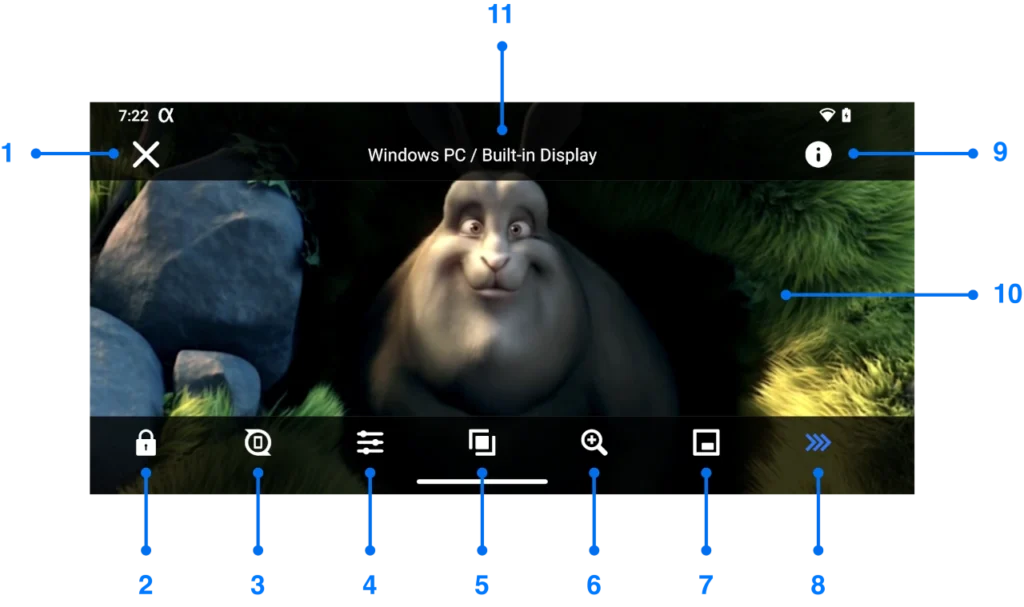
Figure 12. Playback window after successful connection
At the playback stage, the Playback window contains the following controls:
1 – Close button. The button terminates the outgoing connection.
2 – Screen lock button. This button locks the on-screen controls.
3 – Rotation lock button. This button blocks the video image from flipping when the device is rotated.
4 – Picture button. Video image adjustment button. Clicking this button opens a window with elements for adjusting the video image.
5 – Aspect ratio button. The video aspect ratio value changes after each press in a circle. Video aspect ratio values can be as follows:
• “Default” – do not change the video aspect ratio, use the same aspect ratio as on the remote screen.
• “Stretch” – the video aspect ratio will be the same as the aspect ratio of the Playback window.
• “16:9” – video aspect ratio 16:9.
• “16:10” – video aspect ratio 16:10.
• “21:9” – video aspect ratio 21:9.
• “1:1” – video aspect ratio 1:1.
• “2:1” – video aspect ratio 2:1.
• “4:3” – video aspect ratio 4:3.
• “5:4” – video aspect ratio 5:4.
• “3:2” – video aspect ratio 3:2.
6 – Scale button. The video scale value changes after each press in a circle. Video scale values can be as follows:
• “No scale” – do not scale the video image.
• “Crop” – an automatic video image cropping mode. It crops the video image based on the window size and aspect ratio of the original video frame: horizontally or vertically.
• “Horizontal” – crops the video image horizontally.
• “Vertical” – crops the video image vertically.
• “100 %” – 100 percent of the original video image.
• “125 %” – 125 percent of the original video image.
• “150 %” – 150 percent of the original video image.
• “200 %” – 200 percent of the original video image.
• “250 %” – 250 percent of the original video image.
• “300 %” – 300 percent of the original video image.
• “400 %” – 400 percent of the original video image.
• “25 %” – 25 percent of the original video image.
• “50 %” – 50 percent of the original video image.
• “75 %” – 75 percent of the original video image.
7 – PiP mode button. To enter Picture-in-Picture mode.
8 – Get low latency button. This button is used to review with the extended version of the application.
9 – Information button. Click by this button to open a window with information about the current stream.
10 – Content from a remote screen. Playing video content is the main purpose of the Playback window.
11 – Network node name and remote screen source name.
To finish the current playback session, simply click the Close button, this will automatically disconnect you from the streamer. Pressing the back button on your device will perform the same action.
The number of controls (buttons, images, fields, etc) displayed in the Playback Window may change depending on the current orientation of the device: landscape or portrait.
To ensure a comfortable viewing experience when you use the Android screen mirroring feature, we provide the following additional controls in the Playback window.
You can lock all controls on the Playback window by clicking the Screen lock button. After this, only one Unlock button will be available in the center of the Playback window. To fully restore controls in the Playback window, click the Unlock button.
If your Android device supports the ability to rotate the graphical interface based on the device’s orientation, the video image will automatically rotate as the device rotates. Click the Rotation lock button to keep the image in its current orientation. This button allows you to control the orientation of the video image manually – as you need. To return to automatic mode, press this button again.
The Picture button shows additional elements where you can adjust the video image by: brightness, contrast, saturation or hue. Not all video decoders and video renderers support this feature, and this feature is also unavailable on some video resolutions. If this feature is unavailable and you need it, try to change the video decoder in the app settings. Click on this button and the application will show additional elements as shown in the image below.
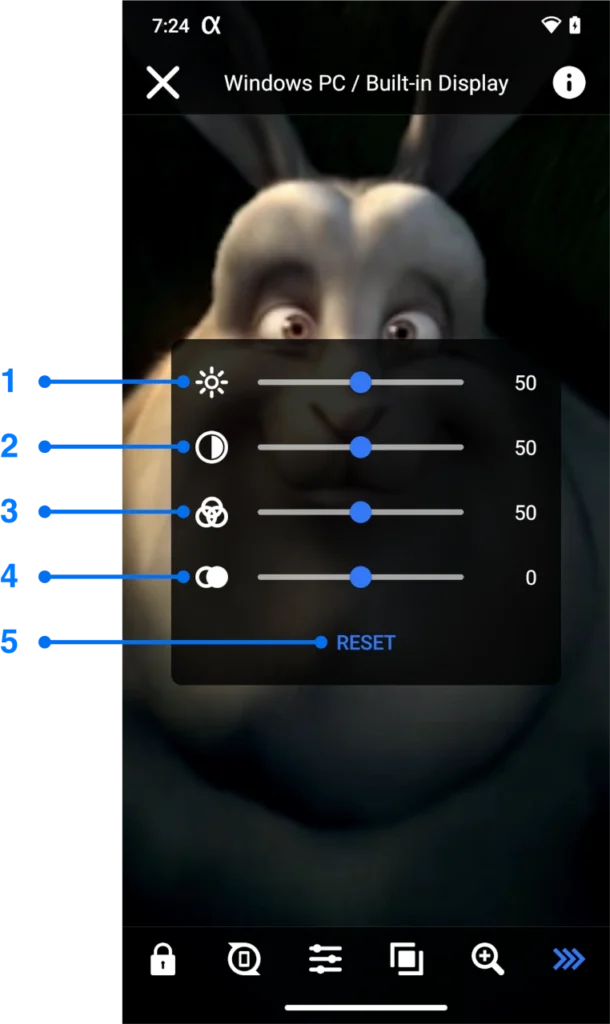
Figure 13. Picture adjustments elements
The Picture adjustments elements contain the following components:
1 – Slider for setting the brightness of the video image and the current brightness value.
2 – Slider for setting the contrast of the video image and the current contrast value.
3 – Slider for setting the saturation of the video image and the current saturation value.
4 – Slider for setting the hue of the video image and the current hue value.
5 – Reset button. Reset all video image settings to default values.
You can adjust the video image levels using the sliders. Video picture settings are saved and applied to subsequent playback sessions. To return video picture settings to default values, click the Reset button.
Click the Aspect ratio button to give the video image the shape you need. The Aspect ratio button changes the aspect ratio of the currently playing video frame. To understand how it works, try using it: click several times and you will see the effect on the displayed video image.
To scale the video frame image, use the Scale button. This button allows you to zoom in, zoom out or crop the video image. Similarly, to understand how it works, try using it: click several times and you will see the effect on the displayed video image. Sometimes this feature is limited and you can scale the image by 25, 50, 75 and 100 percent. In this case, the scaling percentage is calculated based on the size of the Playback window, not the size of the original video frame. This limitation is due to the fact that not all video decoders and video renderers support this feature, and it is also limited for some video resolutions. If this feature is limited and you need it, try to change the video decoder in the app settings.
The settings for these two values (scale and aspect ratio) are not stored and are set to default when starting a new video playback session.
The application supports the function of overlaying a video image on top of the graphical user interface: Picture-in-Picture mode. To enter Picture-in-Picture mode, press the PiP mode button. After this, the playback window will be reduced and allow you to view and interact with the user interface. To exit Picture-in-Picture mode, please select the Playback window. The exit Picture-in-Picture mode button will appear in the center of the Playback window. Then click the exit Picture-in-Picture mode button. This feature is not available on all Android devices. The app automatically checks for this feature when starting a connection. If the feature is not supported, the app will not display the PiP mode button.
The Get low latency button is only available in the regular version of the app and is hidden in the extended version. Click this button to see options for switching to the extended version of the application.
To view current information about a stream, click the Information button. Click on this button and the application will show additional elements as shown in the image below.
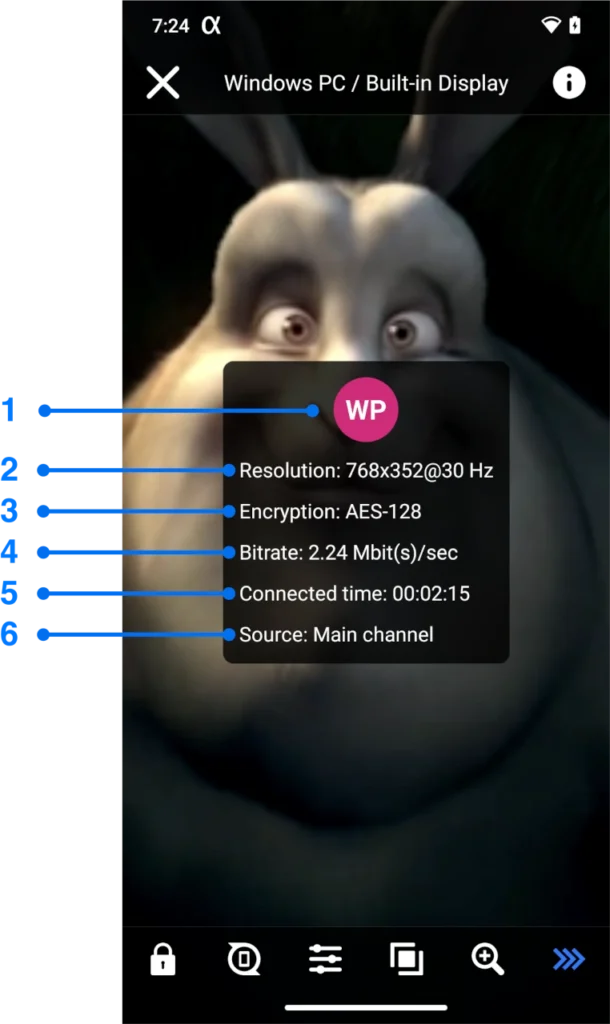
Figure 14. Stream information elements
The Stream information elements contain the following components:
1 – Network node avatar image.
2 – Current video stream resolution.
3 – Current encryption method.
4 – Current bitrate of the stream.
5 – Current connection time.
6 – Currently selected channel.
The Stream information elements display all the necessary information about the stream. These are: current video resolution, current bitrate, encryption method, connection time and source. This information is updated once per second.
If the streamer is in single channel mode, the main channel is selected for connection. If the streamer is in multichannel mode, you will be prompted to select a channel at the connection establishment stage, see the next window.
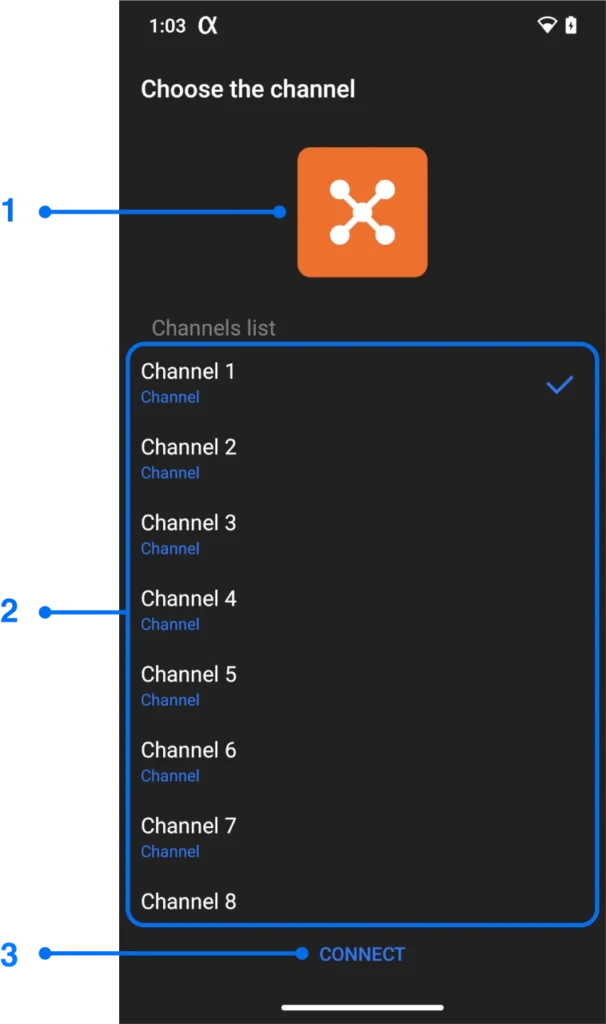
Figure 15. Channels list window
The Channels list window contains the following controls:
1 – Reset selection button.
2 – List of channels to select.
3 – Connect button.
First, select the channel you need in the list. Then click the Connect button. After this, the connection with your streamer begins in the same way as described earlier. If you want to reset your channel selection, click the Reset selection button. If you want to cancel the connection, simply press back button on your device.
Multichannel streamer
Android screen mirroring can be single channel or multichannel. To start broadcasting in multichannel mode, please press Live broadcast button in the Main menu. The multichannel streaming feature allows you to broadcast content from your Android device to multiple devices simultaneously in real time. This function splits audio and video signals and transmits content from the device screen to multiple devices. The type of viewing device does not matter and it can be: a Mac, a Windows PC or Linux PC, an iPhone, an Apple TV, an Android device, etc. The app will open Live broadcast window.
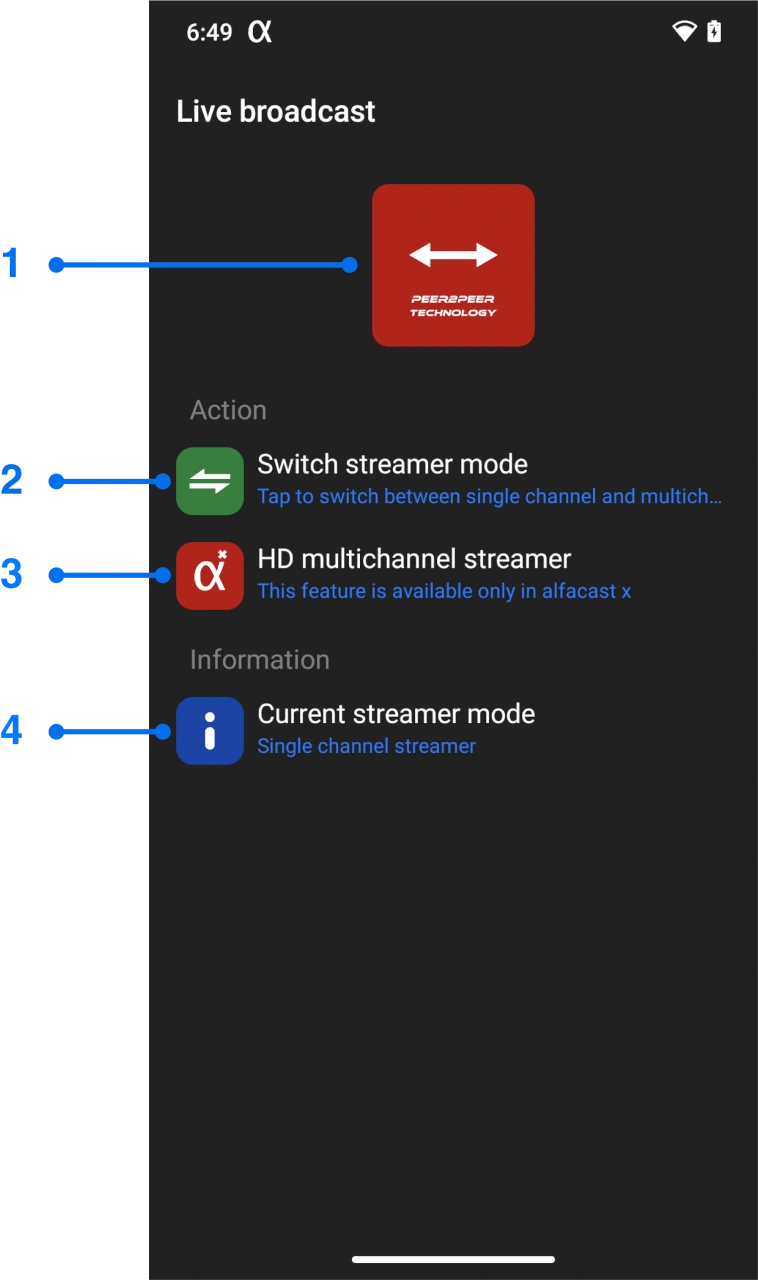
Figure 16. Live broadcast window
The Live broadcast window contains the following controls:
1 – Broadcast mode switch button. Click this button to change the streamer’s broadcast mode.
2 – Switch streamer mode button. Click this button to change the streamer’s broadcast mode.
3 – HD multichannel streamer button is a reminder that there is a more advanced, extended version of the app. This button is only available in the regular version of the app and is hidden in the extended version. Click this button to see options for switching to the extended version of the application.
4 – Current streamer mode button. Description of the selected broadcast mode.
The actions of buttons Broadcast mode switch button and Switch streamer mode button are the same, they act as a broadcast mode switch. Click on any of these buttons to select a broadcast mode from the pop-up menu, see the following figure.
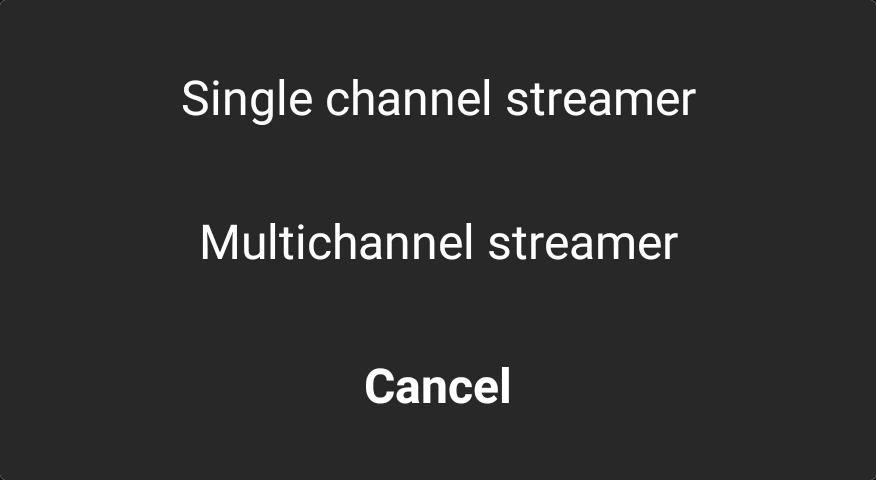
Figure 17. Broadcast mode selection menu
The Single channel streamer button switches the streamer’s broadcast mode to single channel mode. The Multichannel streamer button switches the streamer’s broadcast mode to multichannel mode. The Cancel button closes the menu. Select the broadcast mode you need from the menu items. When you select the multichannel broadcast mode, the application will ask for permission to access the audio device and to access the screen capture. We have already described the necessary steps for granting permissions earlier. Grant all necessary permissions to the application and broadcasting in multichannel mode will begin.
Each time you select a new streaming mode, the app updates its description under the Current streamer mode button. Click on the Current streamer mode button to see full information about the current streaming mode in a separate dialog box.
Incoming connection
The application supports displaying information about the current incoming connection. To display information about the current incoming connection, please connect to your Android device from another device. You can use any device as a viewing device, such as an iPhone or Android smartphone, TV, Mac, Windows PC or Linux PC. After that click the Incoming connection button in the Main menu to open the Incoming connection window.
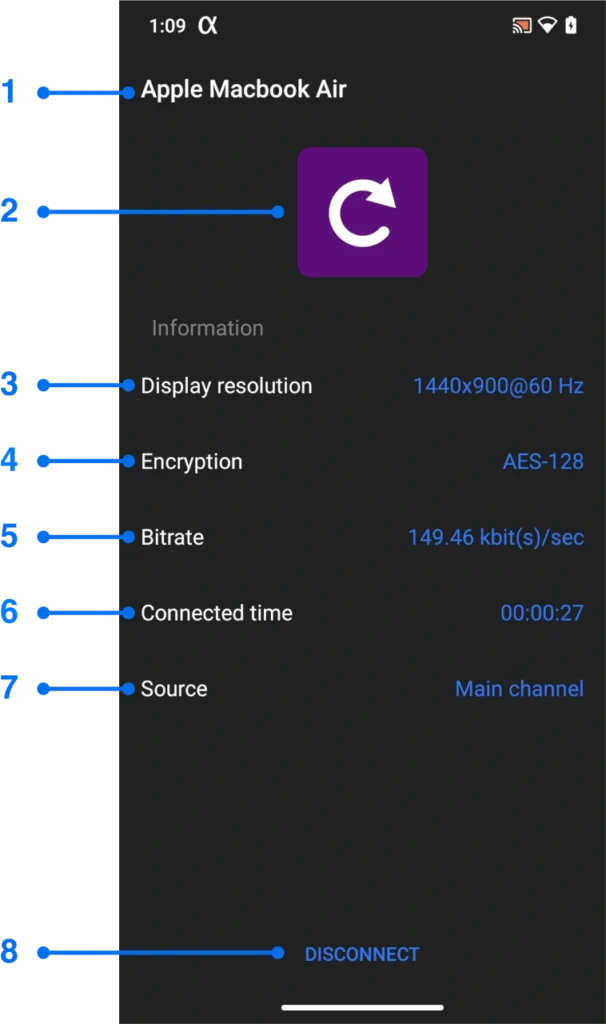
Figure 18. Incoming connection window in single channel mode
The Incoming connection window in single channel mode contains the following elements:
1 – The window title displays the name of the remote network node.
2 – Refresh mode image button. This button is used to select the update period with stream information.
3 – Display resolution of the connected network node. Click on this field to display full information in a separate dialog box.
4 – The encryption method used for this channel. Click on this field to display full information in a separate dialog box.
5 – Current bitrate on the channel. Click on this field to display full information in a separate dialog box.
6 – Channel connection time. Click on this field to display full information in a separate dialog box.
7 – Channel name. Click on this field to display full information in a separate dialog box.
8 – Disconnect button.
Elements 3 through 7 and 1 are static and simply display current broadcast information. By default the information in these fields is updated once per second. You can stop the Android screen mirroring feature and finish the incoming connection on your device using the Disconnect button.
The Refresh mode image button allows you to change the current information display delay – the refresh period. After clicking on the Refresh mode image button, the application will create a pop-up menu for selecting the refresh period.

Figure 19. Information refresh period pop-up menu
Select the value you need from the list. To close the pop-up menu, click the Cancel button.
The Incoming connection window operates in two modes. The current window mode depends on the streamer’s current state: single channel or multichannel streaming. In multichannel streaming mode, Incoming connection window shows general information about the streamer, see the following figure.
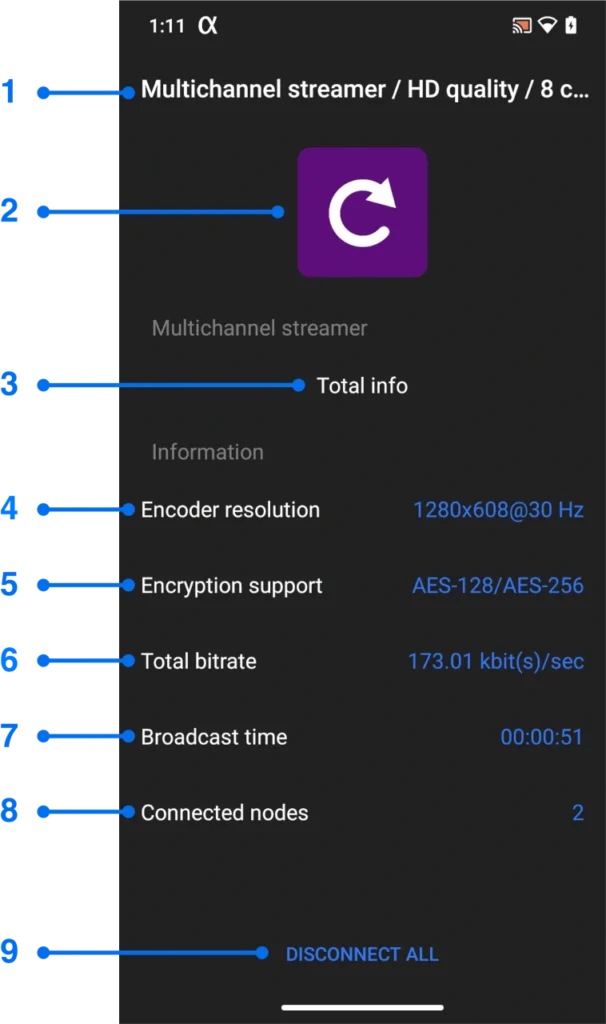
Figure 20. Incoming connection window in total info mode
The Incoming connection window in total info mode contains the following controls:
1 – The window title shows the current broadcast mode of the multichannel streamer.
2 – Refresh mode image button. This button is used to select the update period with stream information.
3 – Display mode selection button. This button is used to select the mode for displaying stream information: total info mode or displaying info for a specific channel.
4 – Encoder resolution field. Current video encoder resolution.
5 – Encryption method field. The values for this field can be:
• “AES-128” – encryption using the AES-128 method.
• “AES-128/AES-256” – encryption using the AES-128 and AES-256 methods, for support regular and extended app versions.
6 – The full bitrate of broadcast stream. Total bitrate for all channels.
7 – Full broadcast time in multichannel mode.
8 – The number of network nodes currently connected to the multichannel streamer.
9 – Disconnect all button. The button to disconnect all connected network nodes.
Elements 4 through 8 and 1 are static and simply display current broadcast information. By default the information in these fields is updated once per second. Time is displayed in hours, minutes and seconds.
The regular application version has a video resolution limitation for multichannel streaming mode up to SD (768×432) quality. The extended version of the application can broadcast video up to HD (1280×720) quality in multichannel streaming mode.
To disconnect all connected network nodes from all channels, press Disconnect all button.
The regular version of the application always uses the AES-128 encryption method. Accordingly, in the regular version of the application, in multichannel broadcast mode, the encryption field will also be AES-128. The extended version of the application uses two encryption methods: AES-128 and AES-256. The extended version of the app supports AES-128 encryption for compatibility with the regular version of the app. Accordingly, in the extended version of the application, in multichannel broadcast mode, the encryption field will be AES-128/AES-256.
We have already described how to work with the Refresh mode image button.
To display information on a specific channel, please select the channel using the Display mode selection button. After clicking this button, the application will show the following pop-up menu.
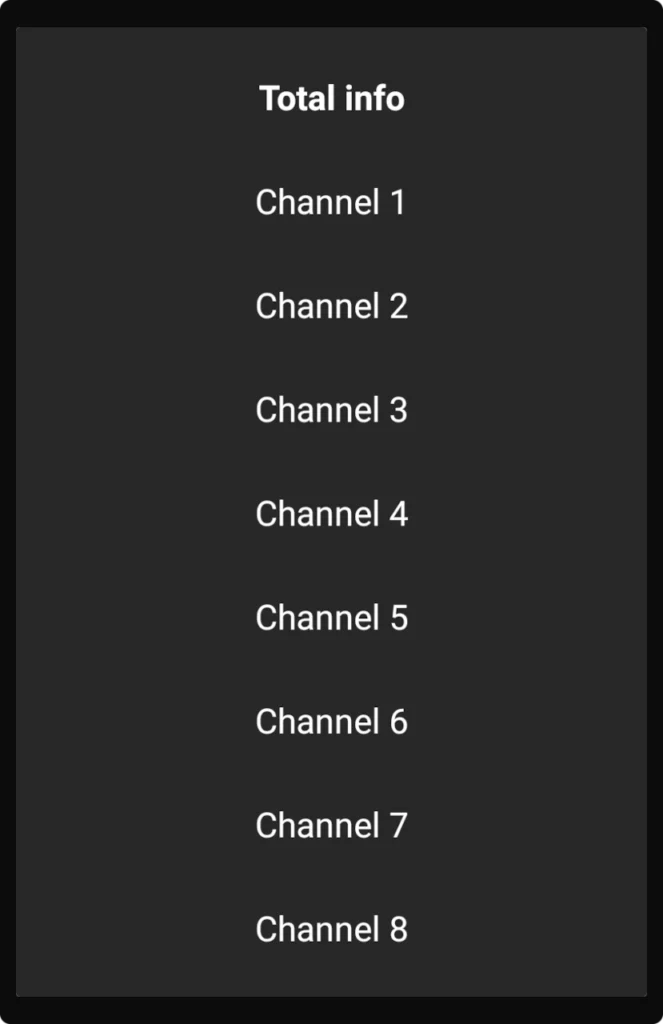
Figure 21. Channel selection pop-up menu
If you select Total info item, the Incoming connection window will display full statistics for all channels, we have already described this mode above. If you select other menu items, the Incoming connection window will display information for a specific channel. In the following figure we show the Incoming connections window in specific channel info mode.
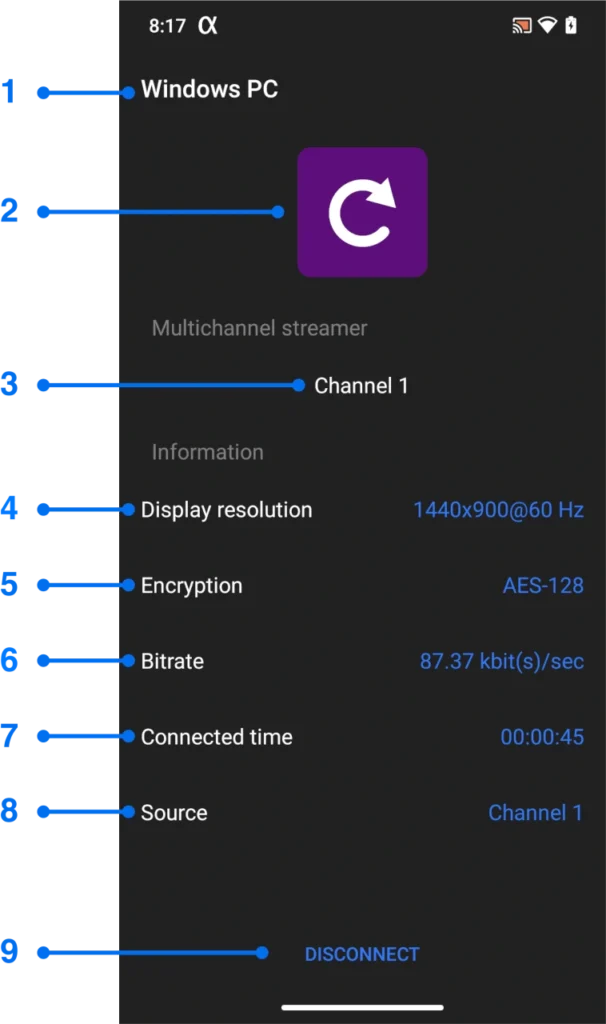
Figure 22. Incoming connection window in specific channel info mode
The Incoming connection window in specific channel info mode contains the following elements:
1 – The window title displays the name of the remote network node.
2 – Refresh mode image button. This button is used to select the update period with stream information.
3 – Display mode selection button. This button is used to select the mode for displaying stream information: total info mode or displaying info for a specific channel.
4 – Display resolution of the connected network node.
5 – The encryption method used for this channel.
6 – Current bitrate on the channel.
7 – Channel connection time.
8 – Channel name.
9 – Disconnect button.
The method of interaction with such a window is the same as for the Incoming connection window in single channel mode. The only difference from the single-channel mode is the presence of a Display mode selection button.
App instruction
There is a built-in instruction in the app. It is a short guide to understanding how to use the app. This instruction describes how to use Android screen mirroring feature, including the basic steps to start streaming and viewing content from a remote screen. To display the Instruction window, press Instruction button in the Main menu or press on network node icon with “No streamers” label.
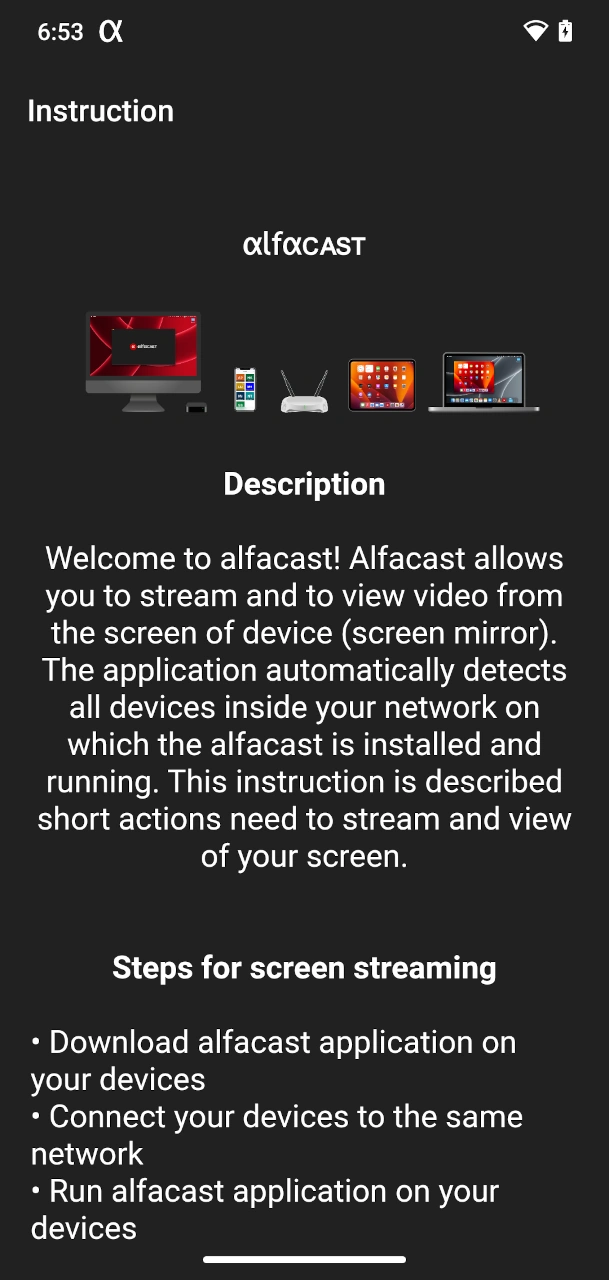
Figure 23. Instruction window
Please read the instruction before using the application. This instruction will cover some of the issues on using the Android screen mirroring feature and how to fix them.
App settings
Today it is difficult to imagine the Android screen mirroring function without settings. To fine-tune the application to your needs, use the Settings window. Click the Settings button in the Main menu to open the window. The Settings window contains several sections: general, streamer and viewer. General section – general application settings, these are the basic settings of the application. Streamer section – streamer application settings. Viewer section – viewer application settings.

Figure 24. Settings window
The Settings window contains the following elements:
1 – Current Avatar picture. Click on the avatar image to change it.
2 – Current alfaname. This option is used to select the name of your network node.
3 – Instruction option. This option displays the instruction built into the application.
4 – Audio capture option. This option enables or disables audio capture in the application.
5 – Video resolution option. This option provides list of supported resolutions for video display.
6 – Bitrate policy option. This option provides list of network bitrate policies.
7 – Playback method option. This option sets the delay time during playback.
8 – Video decoder option. List of video decoders for user selection.
The procedure for working with the Settings window is simple: please select the option you need, after that app will show separate window for the option, then change the value of desired option, and click the Done button to apply changes. If you do not want to save the currently selected option value, simply press the back button on your device. The top icon of each window is an image button and when clicked, displays the Settings default menu.
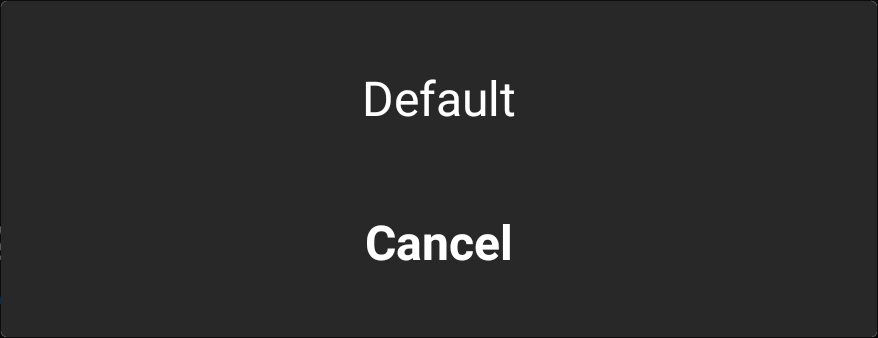
Figure 25. Settings default menu
The Default button resets option to default value without applying. Use the Default button if you are confused about the current application settings or if you have selected the wrong option and want to undo it. The Cancel button closes this menu.
An avatar image is an icon of your network node. This icon is displayed on the viewing device in the Main application window (the area of detected devices). In fact, this icon symbolizes your network node or Android device, it is used to better perceive the different network nodes by the user. Click on the current Avatar picture, and the app will display the following Settings avatar menu.
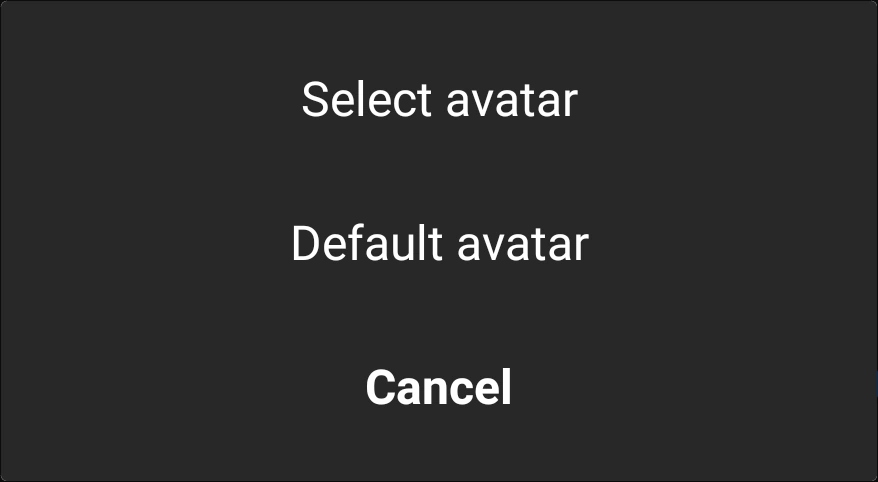
Figure 26. Settings avatar menu
Click the Select avatar option to select an image from your photo library or files on your device. The app will show the standard image selection dialog. Please grant all necessary permissions for the app to access your files on your Android device. Supported image formats for avatar selection: BMP, JPEG, and PNG. Click the Default avatar option to reset the avatar picture to the default image. Once you select it, your new avatar image is automatically applied and sent to all devices running the alfacast app within your local network. The Cancel button closes the Settings avatar menu.
Alfaname is the name of your network node. This field looks like a nickname. This field has certain character requirements. Click this field to edit it and review the requirements.
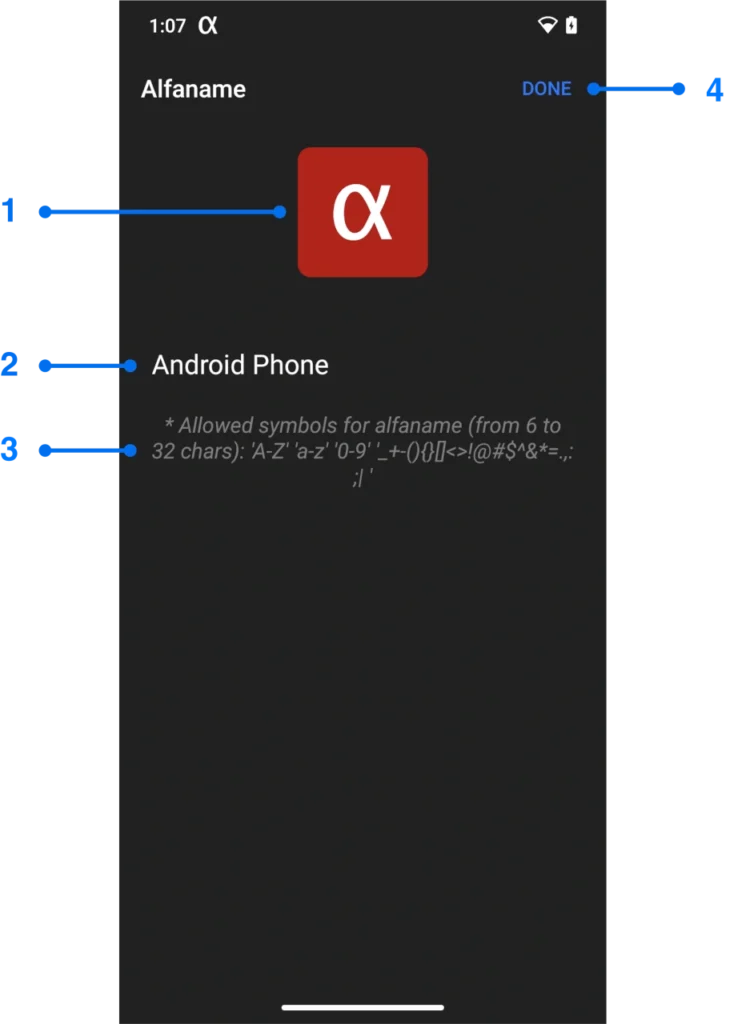
Figure 27. Alfaname window
The Alfaname window contains the following elements:
1 – Default menu image button. Click to display Settings default menu.
2 – Current alfaname value.
3 – Description indicating the length and character limits used for alfaname.
4 – Done button.
Click on the Current alfaname value to modify it, the application will display the keyboard for entering text. Enter text using your device’s keyboard and click the Done button to apply the changes.
To display the instruction built into the application, click the Instruction option. We already provided information on the instruction built into the application earlier in this user manual.
Using the Audio capture option, you can enable or disable audio capture. Click on the Audio capture option to display the following Audio capture window.
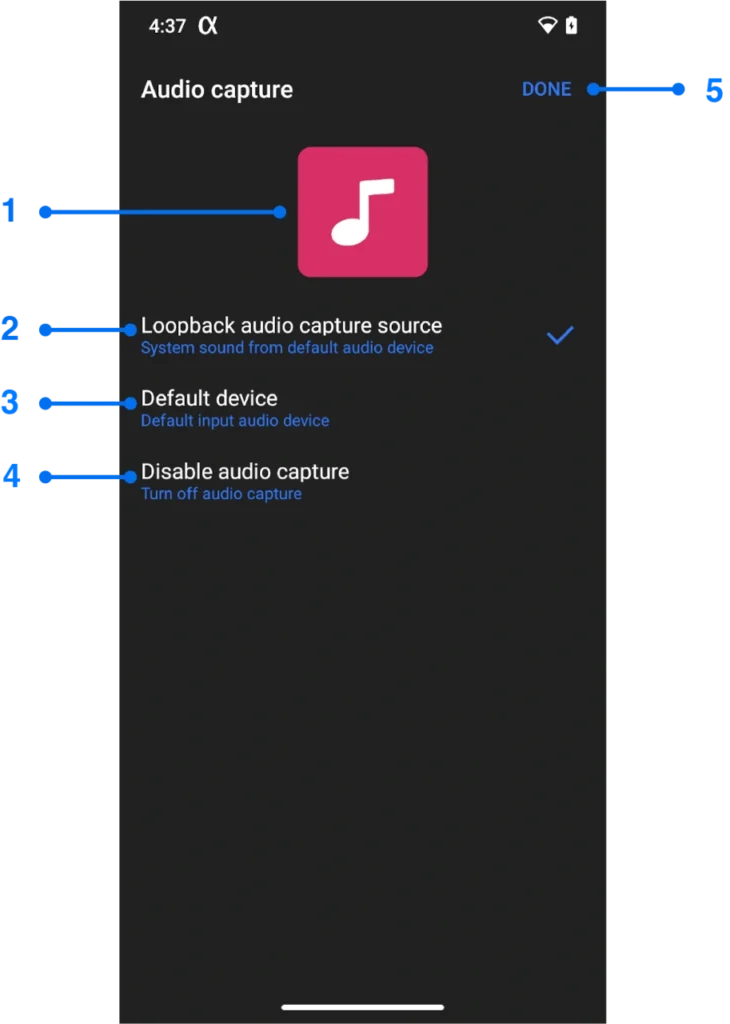
Figure 28. Audio capture window
The Audio capture window contains the following elements:
1 – Default menu image button. Click to display Settings default menu.
2 – Loopback audio capture source. Capture system sound from default audio device.
3 – Default device. Default input audio device.
4 – Disable audio capture. Turn off audio capture option.
5 – Done button.
If you disable audio capture, the app will only capture the device’s screen without audio support. Please note: screen capture cannot be disabled.
App supports system sound audio capture and capture from default audio device (for example: from the microphone, Bluetooth audio input device or external USB audio device). The system sound audio capture is available since Android 10. There is not legal software way to capture system sound before Android 10 for third party apps, this is Google Android limitation. If you need to capture system audio on device before Android 10 then this is possible using the method described later in this user manual: see System audio capture section.
It is also possible to select the required video resolution of the encoder using the Video resolution option. Click on the Video resolution option to display the following Video resolution window.
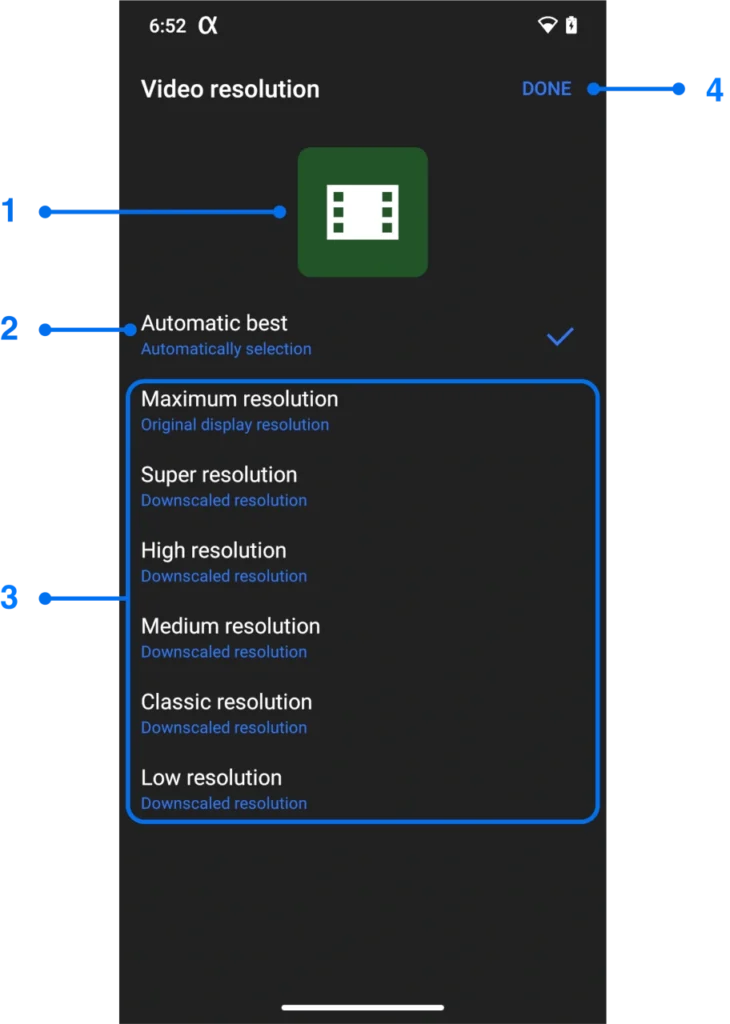
Figure 29. Video resolution window
The Video resolution window contains the following elements:
1 – Default menu image button. Click to display Settings default menu.
2 – Automatic best option.
3 – List of downscaled video display resolutions.
4 – Done button.
This list includes video resolutions up to the maximum physical resolution of the display. If you select Automatic best option, the application will automatically determine the best resolution from all available ones. In fact, the exact resolution of the frame buffer (this buffer is used for image capture) cannot be determined in advance, so the resolutions in the list are presented as names: Maximum resolution, Super resolution, High resolution, Medium resolution, Classic resolution, Low resolution. The regular version of the application limits this value to the minimum resolution with 30 Hz frequency. The extended version of the application supports resolution up to 4k Ultra HD (3840×2160) with a frequency of 60 Hz.
Another useful feature is bitrate policy. Click on the Bitrate policy option to display the following Bitrate policy window.
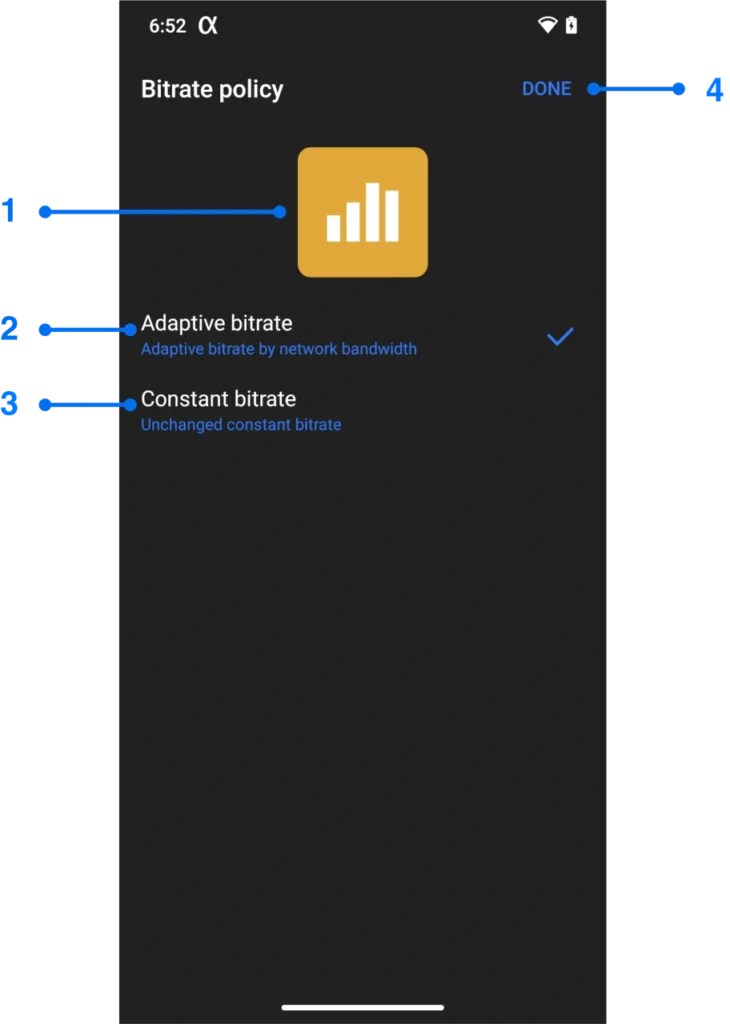
Figure 30. Bitrate policy window
The Bitrate policy window contains the following elements:
1 – Default menu image button. Click to display Settings default menu.
2 – Adaptive bitrate policy.
3 – Constant bitrate policy.
4 – Done button.
The bitrate policy can be adaptive or constant. Adaptive bitrate policy – adjusts the bitrate to network conditions. With the Adaptive bitrate policy enabled, the bitrate will change dynamically depending on the maximum network bandwidth.Constant bitrate policy – a consistent, high bitrate throughout the entire broadcast. Constant bitrate policy is useful when you are confident in your network’s bandwidth and always want excellent video quality. This option has an effect only for single channel broadcasting mode and does not affect multichannel mode. The multichannel streamer always operates with an Adaptive bitrate policy. The regular version of the application always uses the Adaptive bitrate policy.
The Playback method option can be used to reduce or increase the delay time between the streaming device and the viewer. Click on the Playback method option to display the following Playback method window.
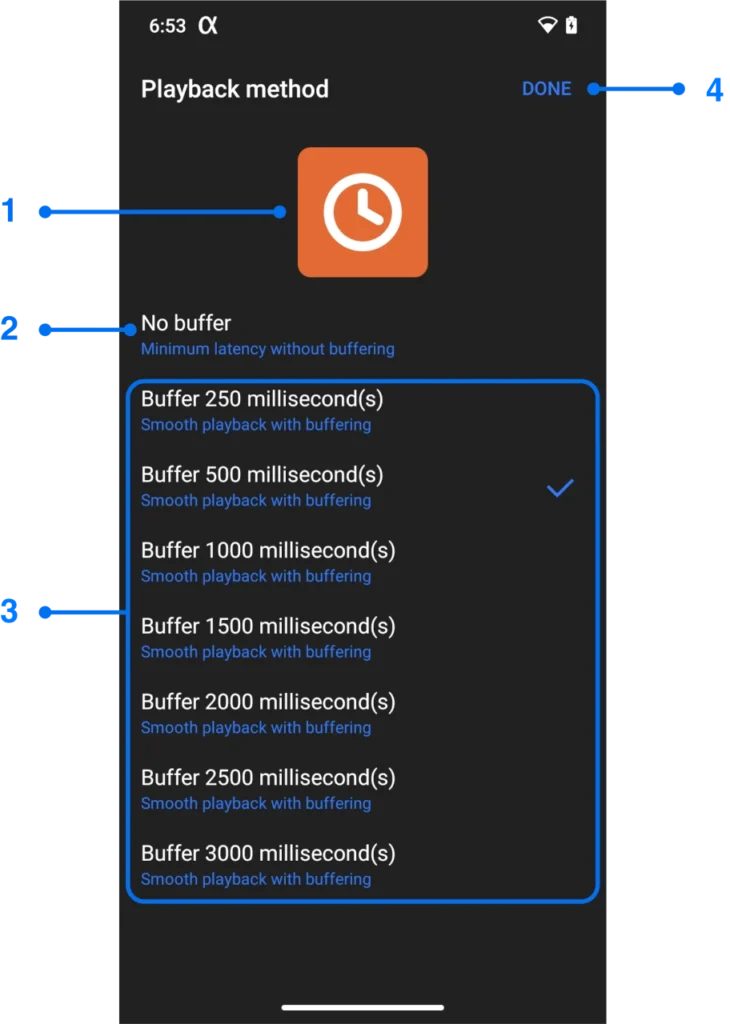
Figure 31. Playback method window
The Playback method window contains the following elements:
1 – Default menu image button. Click to display Settings default menu.
2 – No buffer delay. Minimum latency without buffering.
3 – List of playback delay values.
4 – Done button.
The delay time is adjustable from 0 (No buffer) to 3000 milliseconds (3 seconds). This is an approximate delay time. We recommend using a 500 milliseconds buffer. The No Buffer option provides minimal delay between the broadcasting and viewing devices, but synchronization problems and other audio and video artifacts may appear. In the regular version of the application, this option is always set to 3000 milliseconds.
The Video decoder option displays the video decoders supported by the application and the Android OS. Click on the Video decoder option to display the following Video decoder window.
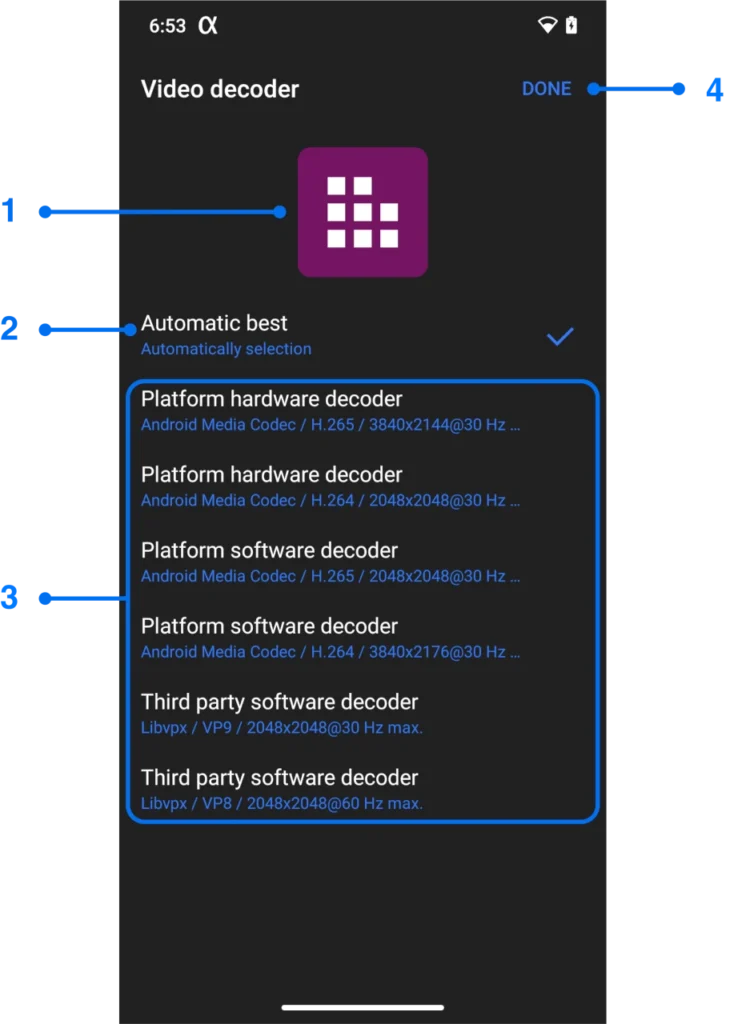
Figure 32. Video decoder window
The Playback method window contains the following elements:
1 – Default menu image button. Click to display Settings default menu.
2 – Automatic best option.
3 – List of video decoders.
4 – Done button.
You can select any video decoder from the list and evaluate the image quality and bitrate of the stream. If you select a video decoder that is supported by your Android device, but there is no similar video encoder on the streamer side, the application on the streamer side will automatically select the video encoder. In any case, the application automatically selects a video encoder on the streamer’s side. The figure above shows the list of video decoders for this specific device model. Each device will have its own list of video decoders. The regular version of the application limits this value to SD quality (768×768) with a frequency of 30 Hz. The extended version of the application allows viewing content up to 4k Ultra HD (3840×2160) quality with a frequency of 60 Hz.
System audio capture
If you are using Android version 10 and above, there is no problem, just select what you need in the app settings. Before Android 10, as we mentioned earlier, there is no legal software way to capture system audio for third-party apps. There is one way to do this: make or purchase a loop device to capture sound through a microphone: Audio Loopback Dongle (https://source.android.com/docs/core/audio/latency/loopback). The basic idea is this: you route the audio from your playback device to your capture device (the audio from your headphones to your microphone). For these purposes, you can use an external USB sound card or Bluetooth headset (loop from audio speakers to line-in port). The main goal is to loop the playback device into the recording device. Our application already supports capturing sound from a microphone, Bluetooth headset or an external USB sound card.
App update
The app supports automatic update checking. It periodically checks for new app version and notifies the user. Please update the application regularly as soon as possible. This will reduce software errors and make the Android screen mirroring function more optimal in terms of performance and OS resources. You can also check for app updates manually by clicking the Update button in the Main menu. After clicking the button, the application will open the Update window shown in the following figure.
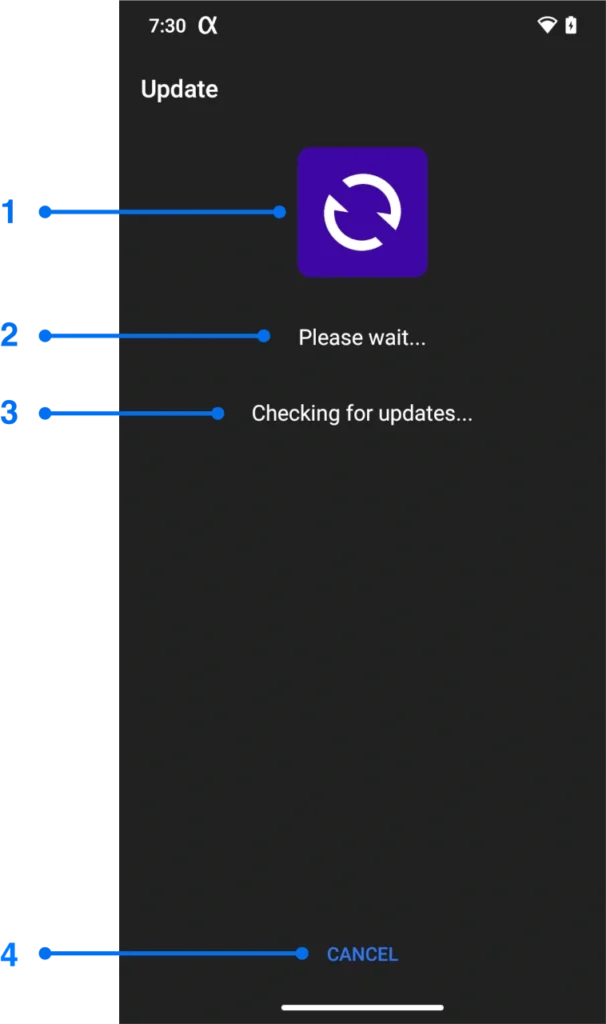
Figure 33. Update window. Checking for updates
The Update window contains the following elements:
1 – Current version button. Click to display the current version of the application.
2 – Information field. The value of this field displays the current update status.
3 – Details field. The value of this field displays the current update status.
4 – Action button. Multifunctional button, its purpose changes during the update process. It can take the following names: Cancel button, Return back button, Download button, Update button – depending on the current update status.
Please wait some time to establish a connection with the update server. You can interrupt the checking at any time by clicking the Cancel button. If the current version is updated, the application will notify you about it.
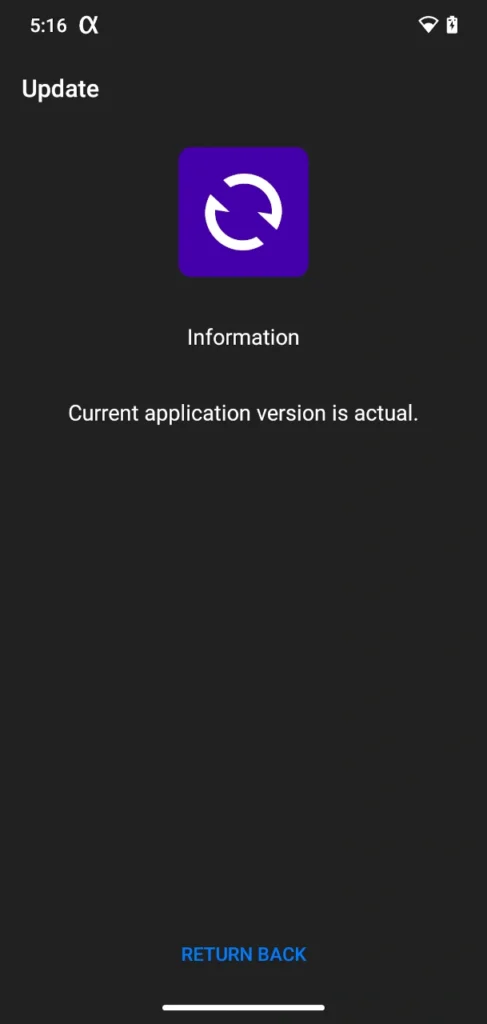
Figure 34. Update window. The current app version is actual
Click the Return back button to close the Update window. If a new version of the application is detected, the Update window will notify you as follows.

Figure 35. Update window. There is new app version
Click the Download button if you want to download the update or press back button on your device if you do not want to download and install the new app version. If you click the back button, the Update window will close. If you click the Download button, the application will ask for permission to install.
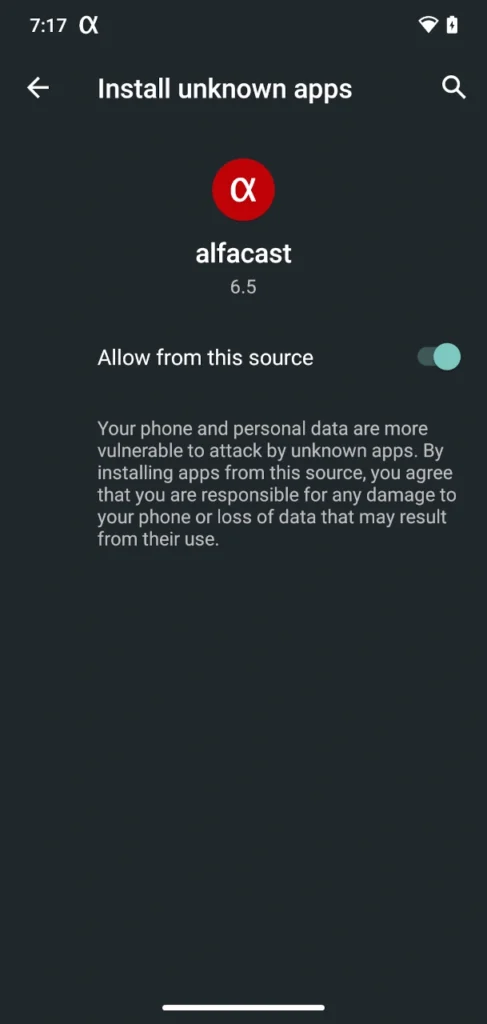
Figure 36. App requests install permissions
Please grant the app install access otherwise you will not be able to update the app. Move the slider as shown in the figure below and press the back button on your device. After that, click on the Download button again, the update file will begin downloading from the server.
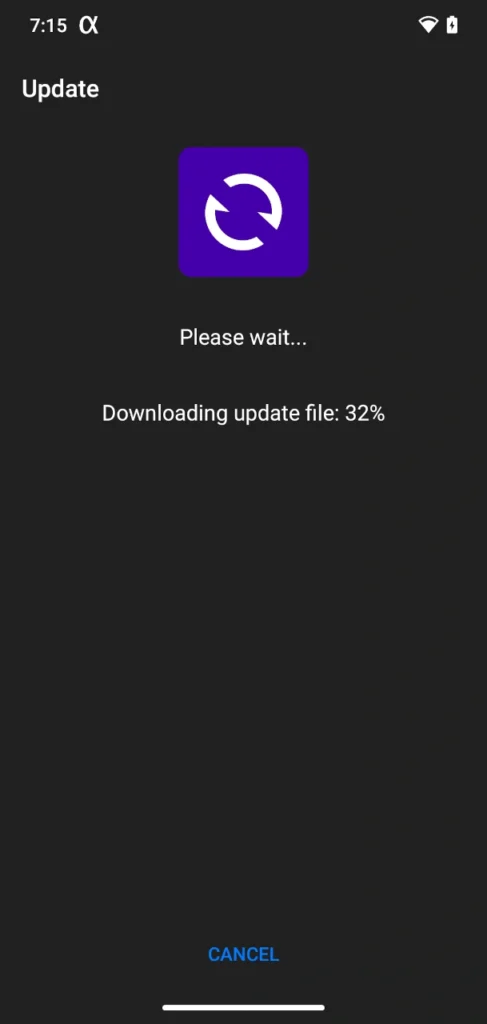
Figure 37. Update window. Downloading update
Please wait until the update file is downloaded completely. If you want cancel the download please click the Cancel button. The Update window displays the progress of the update file download. After the update file has fully downloaded, the application will ask you again if you want to install the new app version.
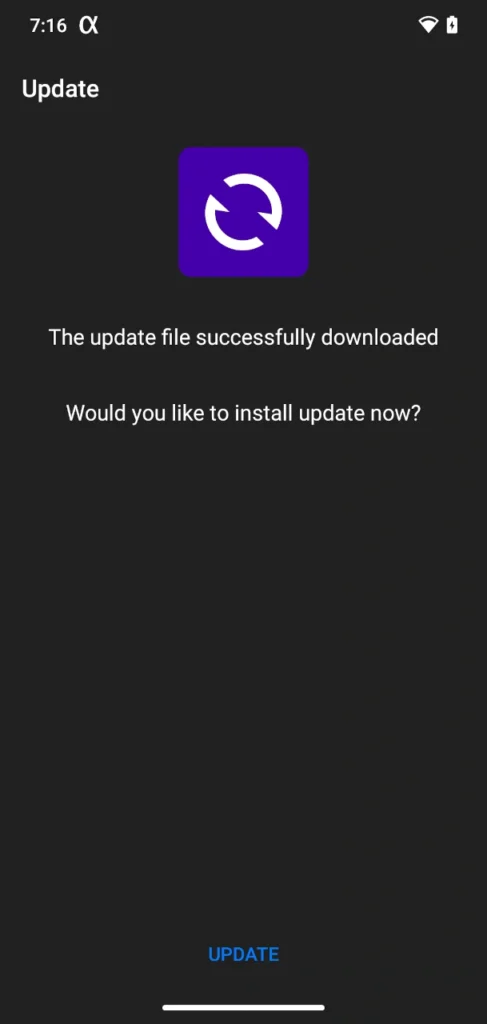
Figure 38. Update window. The update file successfully downloaded
If you agree to run the application update, click the Update button, otherwise click the back button on your device. If you clicked back button, the Update window will close. If you clicked the Update button, the Android OS will provide additional setup dialog box.
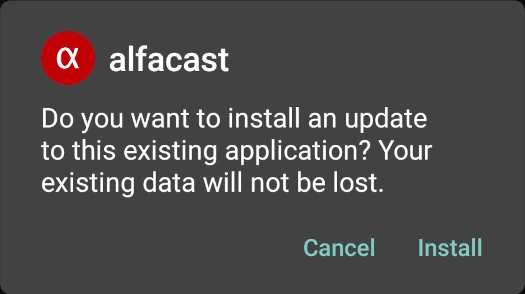
Figure 39. Android OS install app update dialog box
Please click the Install button to begin installing the update. If you decide to cancel the app update, click the Cancel button. Once the update starts, the application will be closed and the Android OS will update the application. After the application has been successfully updated, you will need to reopen it yourself.
About
Information about the program can be found in the About window. To display the About window, press About button in the Main menu. We provide the following information about our Android screen mirroring app: version, information about our project and website address. We also provide information about the open source libraries used, authors, and the text of the open source licenses.

Figure 40. About window
Please read the program information if you are interested in details about our software.
App license key activation
To take full benefits of the extended version of the app, you must have an activation key. After installing the extended version, you will be able to enjoy a trial period. During this trial, you will be able to evaluate all the app’s features. You can purchase an activation key on our website. After purchasing, please enter the key into the app. To begin activation, click the License key button in the Main menu. You will see the window shown in the following figure.
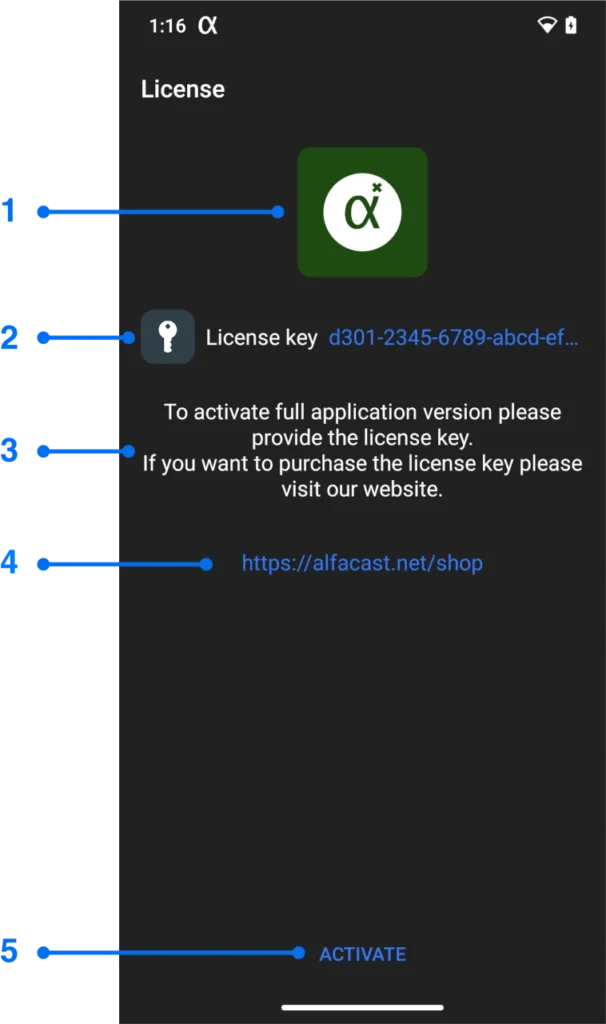
Figure 41. License window
The License window contains the following controls:
1 – Visit the store image button. Clicking this button displays an additional pop-up menu with a link to the site for purchasing a license key.
2 – License key field. Please provide a valid license key in the following format: xxxx-xxxx-xxxx-xxxx-xxxx (lowercase).
3 – Message about the need to activate a license key with information. Please read it.
4 – Information about the website where you can purchase a license key.
5 – Action button. Multifunctional button, its purpose changes during the update process. It can take the following names: Activate button, Ok button, Cancel button – depending on the current activation status.
After successfully purchasing a license key on the website, it must be activated. Enter your license key in the License key field. Click on the License key field to open the License key window.
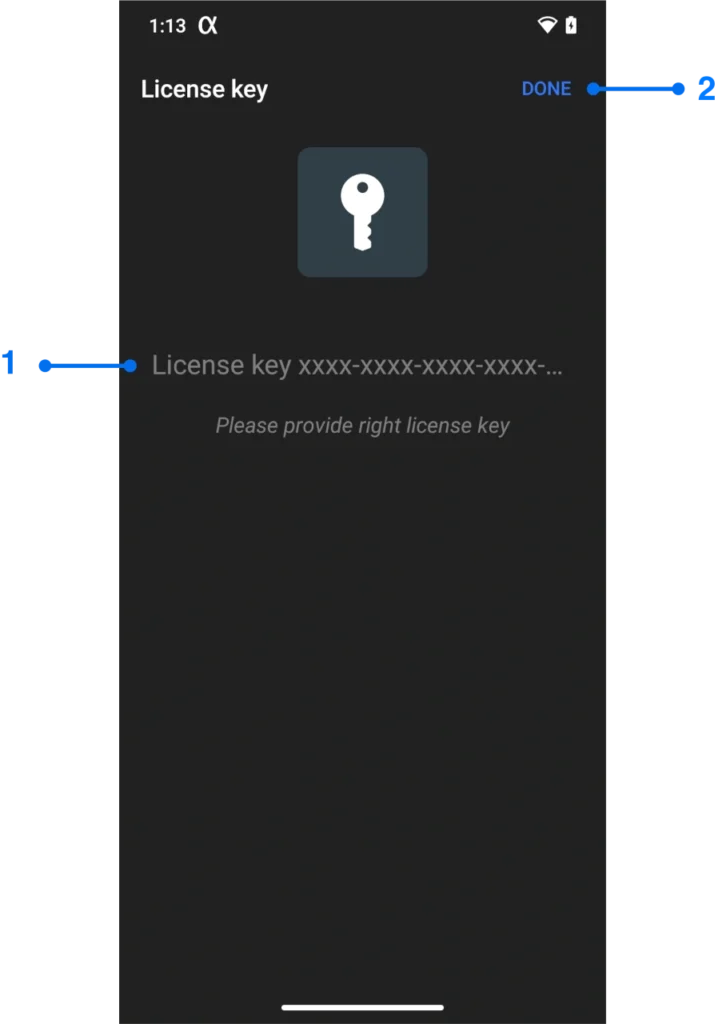
Figure 42. License key window
The License key window contains the following controls:
1 – License key entry field.
2 – Done button.
Click on the License key entry field. Enter your license key using your keyboard. Then click the Done button. The License key window will close. If you entered the correct license key, the License key field in the License window will be filled with your key. Next, click on the Activate button, this button will only become available after entering the correct license key. At the beginning of the activation process, the application will create the following dialog box with information about the activation.
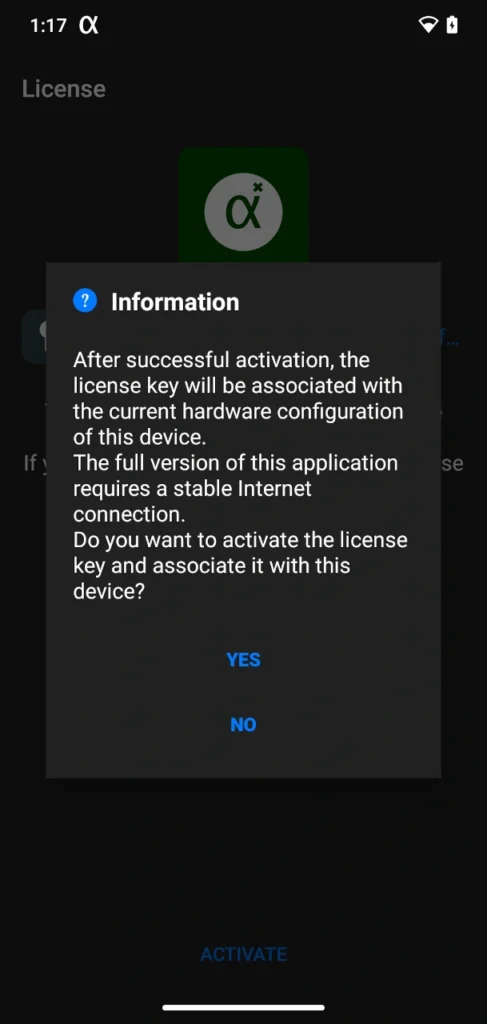
Figure 43. License key activation info
Please read the information provided in the dialog box to the end. If you agree to the terms, click the Yes button to begin the license key activation process. If you do not agree with the terms of license key activation, click the No button to finish and exit from the activation process. During the activation process, the License window will display the following elements, see the figure below.
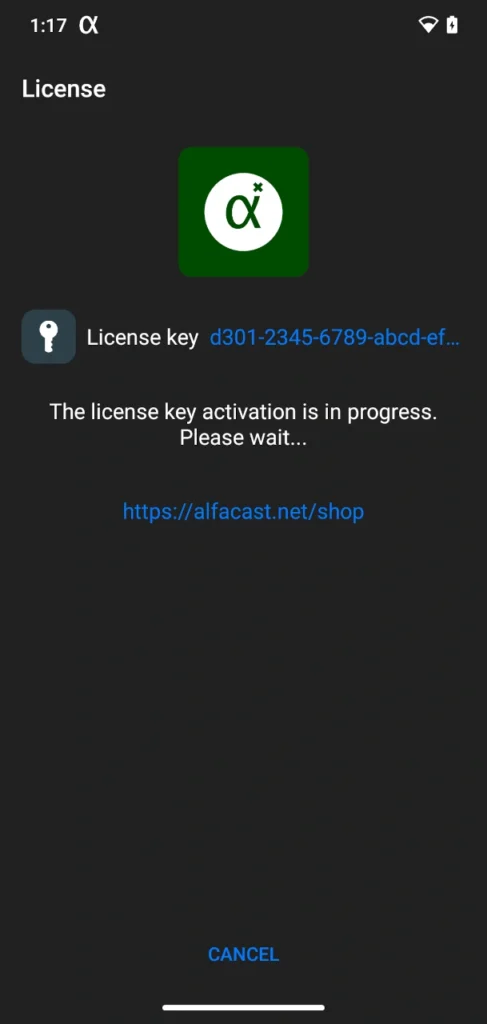
Figure 44. License window during activation process
The license key activation process takes some time, please wait until it is complete. Typically, it takes no more than 30 seconds. If you want to cancel the activation process, click the Cancel button. If the key activation process failed, carefully review the error message. If you can fix the activation error, then fix it yourself; if not, then contact the developer. After successful activation of the license key, the application will inform you about it, see the next window.
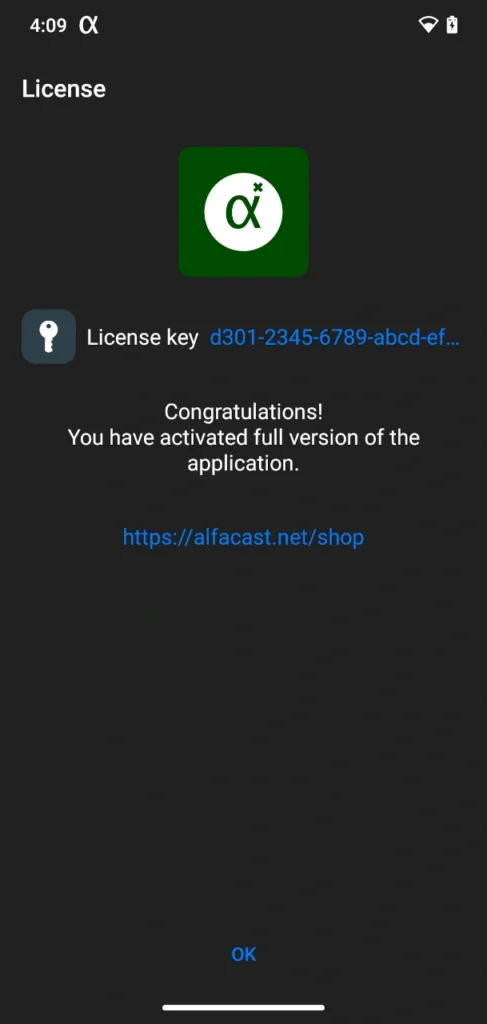
Figure 45. License window after successful activation
At this point, the license key activation process is complete. Click Ok button to exit the License window and start using the full version of the application.
Conclusion
We have fully described and reviewed alfacast application. Overall, the application is intuitive and easy to use. Alfacast app for Android screen mirroring offers a wide range of features and functionality. There is a real-time streaming function. There is audio and video playback function. The connection is encrypted and secure. Each network node can broadcast its desktop content to multiple devices simultaneously. The extended version of the application has high quality video streaming feature up to 4K Ultra HD, it has low latency playback, more secure connection and other benefits. If you want to learn more about the application, you can watch the video on our YouTube channel.